Wednesday, December 28, 2005

Out and About


I'll be out for the next few days, spending time with 3rd Battalion, 7th Marines. I'll post some info about my visit with 3/7 when I get back to Camp Fallujah. Ooh Rah!

Monday, December 26, 2005

Holiday Blues and Museum Artifacts


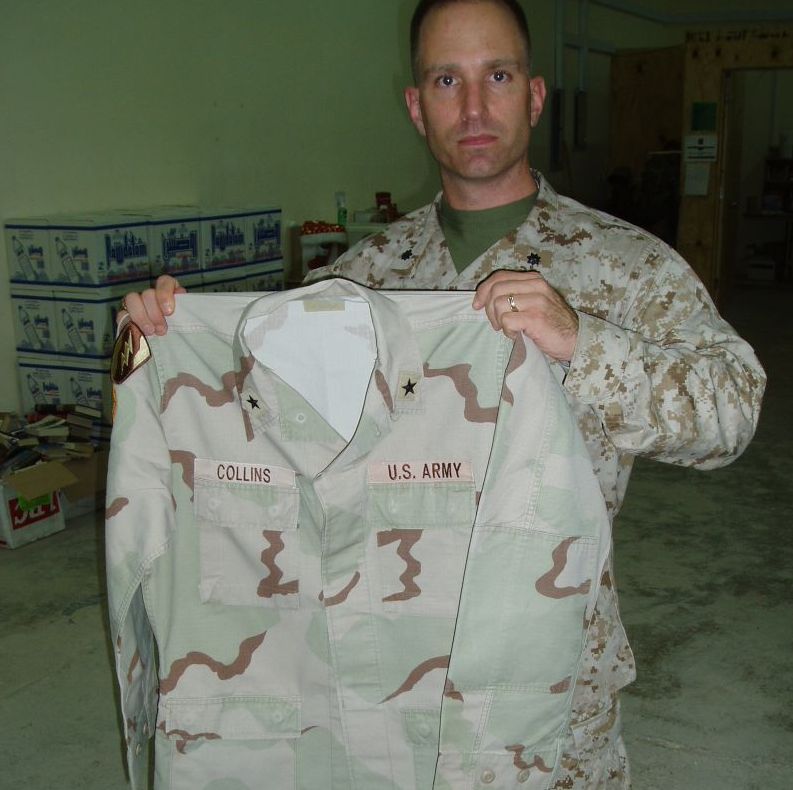
The uniform of BGen. Augustus Collins, 155 BCT, donated by the General for accession into the Marine Corps Museum
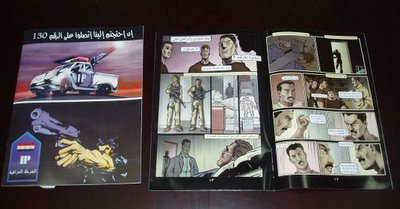

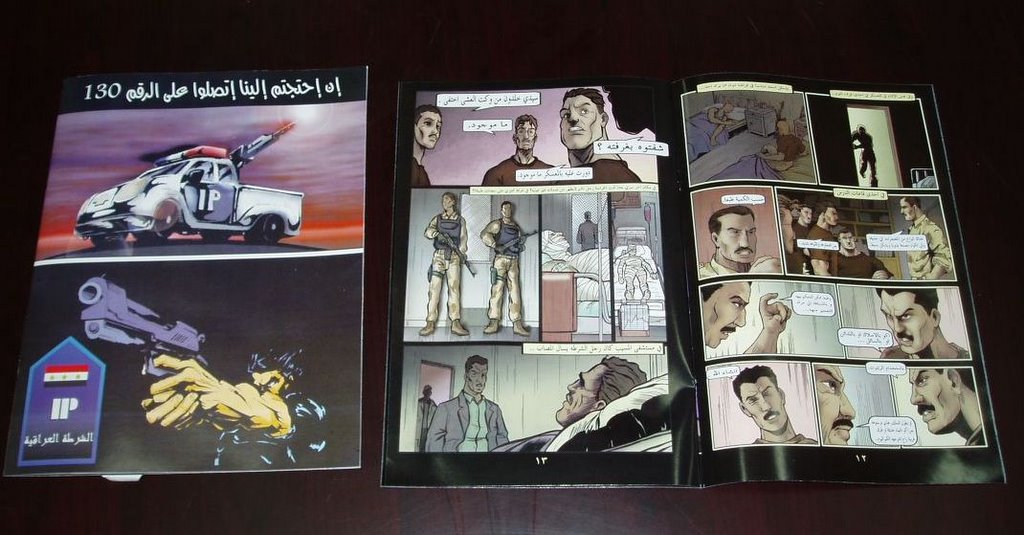
Iraqi Army (IA) and Iraqi Police (IP) comic books, distributed by coalition forces in support of "information operations" in Iraq, 2005
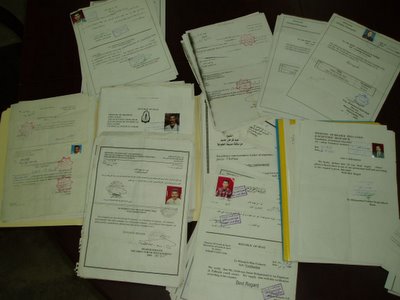

Original applications for Fallujah resident and contractor Identification cards, bound for the Marine Corps Museum, December, 2005


Well…it’s the day after Christmas and even in Iraq, a small dose of “post Christmas day blues” has spread throughout the camp. Just like home, the days leading up to Christmas generated an air of excitement about the camp. As Christmas eve approached, the troops became animated and playful, wearing stocking caps instead of boonie covers and greeting one another with “Merry Christmas, Happy Holidays and Ooh-rah!” Non-stop religious Services were conducted by the various Command Chaplains and packages were rushed from the Fallujah post office to waiting 7-tons or HMMWV’s for transport to the troops before Christmas morning. Laughter and good cheer was the medicine of the day.

As of this morning, everything’s back to normal. Christmas decorations are being dismantled and the excitement of Christmas has passed. The Marines of II MHG and 5/14 Provisional Military Police continue on with their convoy security patrols. The grunts of Regimental Combat Team 8 (RCT-8) headed out this morning, just as they have every morning to conduct cordon and knocks, searches, and raids against high value targets in town. The helos continue to fly over the camp, one buzzing overhead as I write this post. Today, at least one CH-46 medevac landed at Fallujah surgical, bearing wounded Marines. A Cobra gunship providing security escort passed overhead as the 46 touched down to drop off its payload. Life continues, and so continues the carnage and violence that separates us from our counterparts at Camp Lejeune, Quantico and Camp Pendleton. Christmas has come and gone, the goodwill and cheer a fading memory as Marines put their noses to the grindstone and push forward with their daily routine.

Our work never really stopped. It was merely downplayed by the joyous feelings that Christmas brings to each and every Marine deployed. Opening a care package on Christmas day, no matter how big or small, was just as exciting to us as that gift we tore into as a 9 year old at home, many years back. The Marines here are kids at heart. Yesterday, we were all thinking of home, of family and of Christmas’ past.

Today, we are back at work, our minds refreshed, the holiday over. I am back to conducting interviews with the Marines of 5/14, and will be departing Camp Fallujah in a couple days to spend a week with an infantry unit north of my current location. Once again, I am looking forward to getting out of Camp Fallujah and the garrison environment it has become. Going to the field is a welcome relief I am fortunate to experience.

In addition to the interviews I conduct with Marines across the area of operations (AO), my duties include collecting unique artifacts for accession into the Marine Corps Museum. I’ve always had a fascination with historical memorabilia and militaria, and though I’m neither a historian nor a museum curator, this deployment has helped turn my fascination into an official duty, if only for the duration of this deployment. I’m actually charged with looking for such items on behalf of the Marine Corps Museum, some of which may one day be found on display in a museum or archived for the use by military historians.

Museum artifacts come in all shapes and sizes. I’ve had to alter my preconceived ideas about what actually constitutes an artifact. My pre-deployment concept of an artifact was a simply a weapon or a uniform, perhaps a war trophy of some sort. However, artifacts are much more varied than just guns, trucks or uniforms. Imagine the value of an original, unmarked booklet of ballots from the Iraqi national elections held December 15th, 2005. In 50 years, that very book of ballots will be a museum curators dream. Though merely a ballot book to most, a museum curator immediately sees its value to future researchers and historians.

I’ve been fortunate to come across some great artifacts while deployed. A box of artifacts sits in my workspace at Camp Fallujah, waiting to be mailed to the museum curator at Quantico. I’ve picked up many items, such as original election and referendum ballots; coalition “propaganda” handbills posted on Iraqi lamp posts and an Arabic copy of the Iraqi constitution circulating the streets of Fallujah. I’ve received a cassette tape filled with anti-American rhetoric, captured from insurgents in Iraq, and possess an Iraqi martyr flag found balled up in a vacant Fallujan home by Warrant Officer Fay. We are hoping to get our hands on a collection of weapons captured from the insurgents by Marines from RCT-2, to include some fantastic AK-47’s, RPK’s, pistols, knives, swords and various hand-made rocket launchers and RPG tubes made with PVC pipe and sheer ingenuity. Just this evening, a young Marine popped into my work space and hand delivered one of the camouflage utility uniforms worn in Iraq by Brigadier General Augustus Collins, Brigade Commander for the 155 BCT, II MEF (Fwd). General Collins was kind enough to offer his uniform when I asked if he'd be interested in donating it to the museum. A man of his word, the General promised and delivered. The 155 leaves Iraq this month after spending the last year in the Babil Province, fighting the insurgency and turning over parts of the AO to the Iraqi Police (IP) and Iraqi Army (IA). His uniform may one day adorn a mannequin at the Smithsonian or other museum, as General Collins was the first African-American General in the Mississippi National Guard, and the first to command a National Guard Brigade in combat while serving subordinate to a major Marine Corps chain of command.
Sunday, December 25, 2005

Christmas, 2005


Marines and sailors sing Christmas Carols outside the Camp Chapel, Dec. 24, 2005


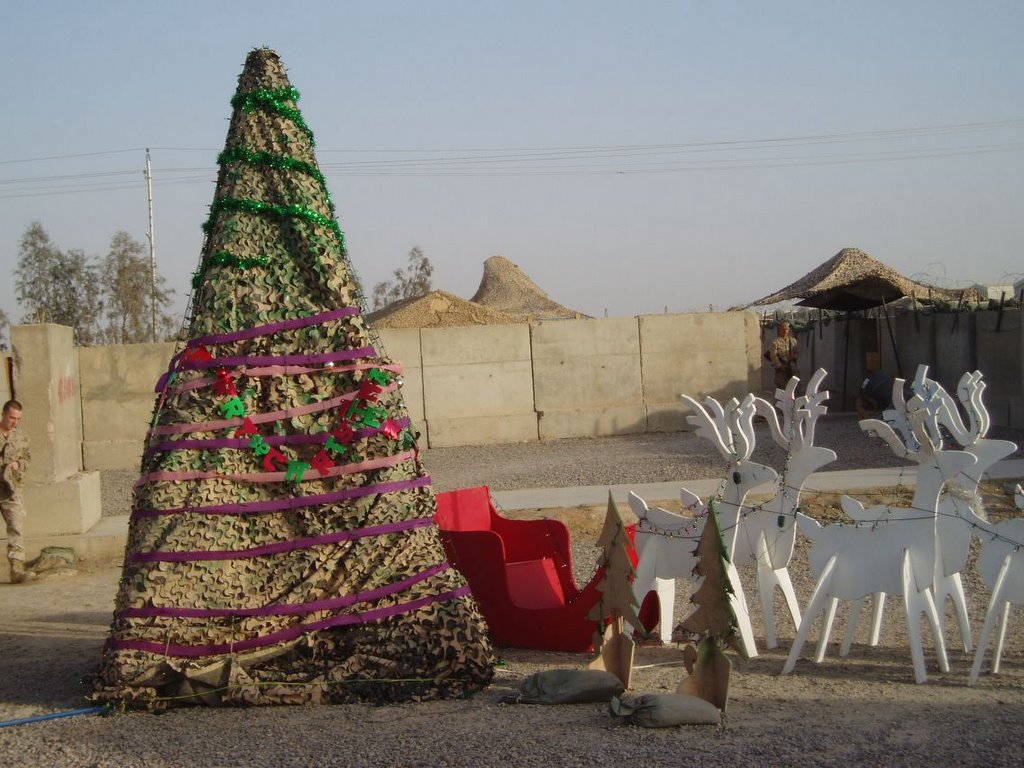
Our Cammie-netting Christmas tree outside of DFAC-1, Camp Fallujah


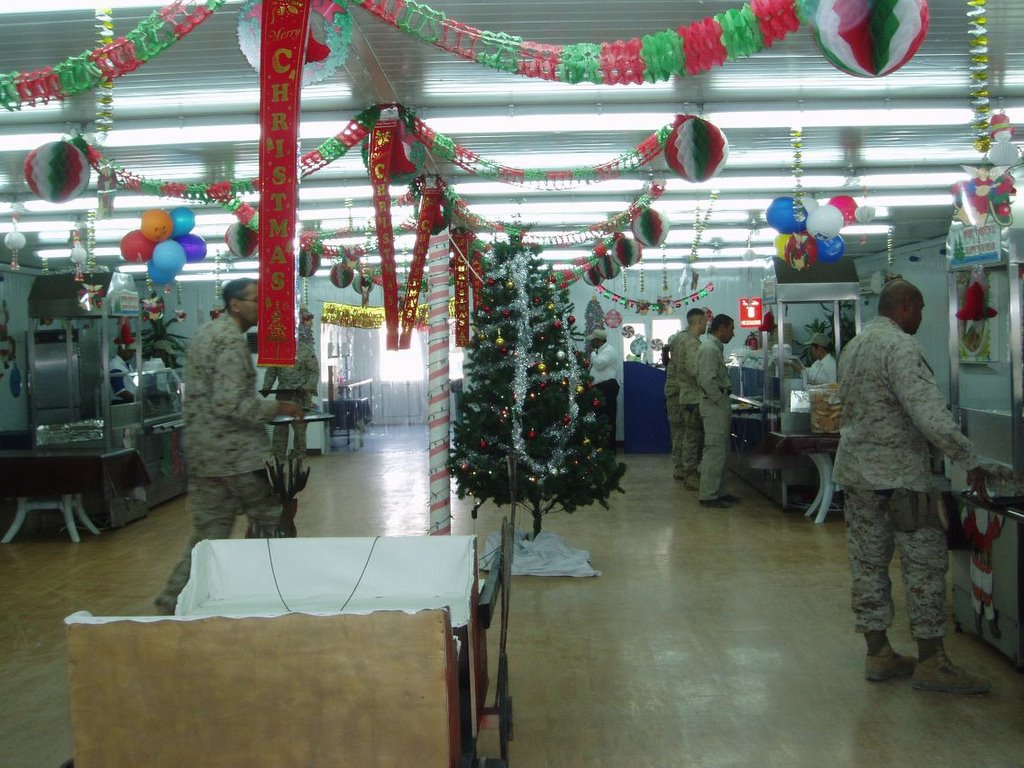
Serving line decorations inside the Dining Facility


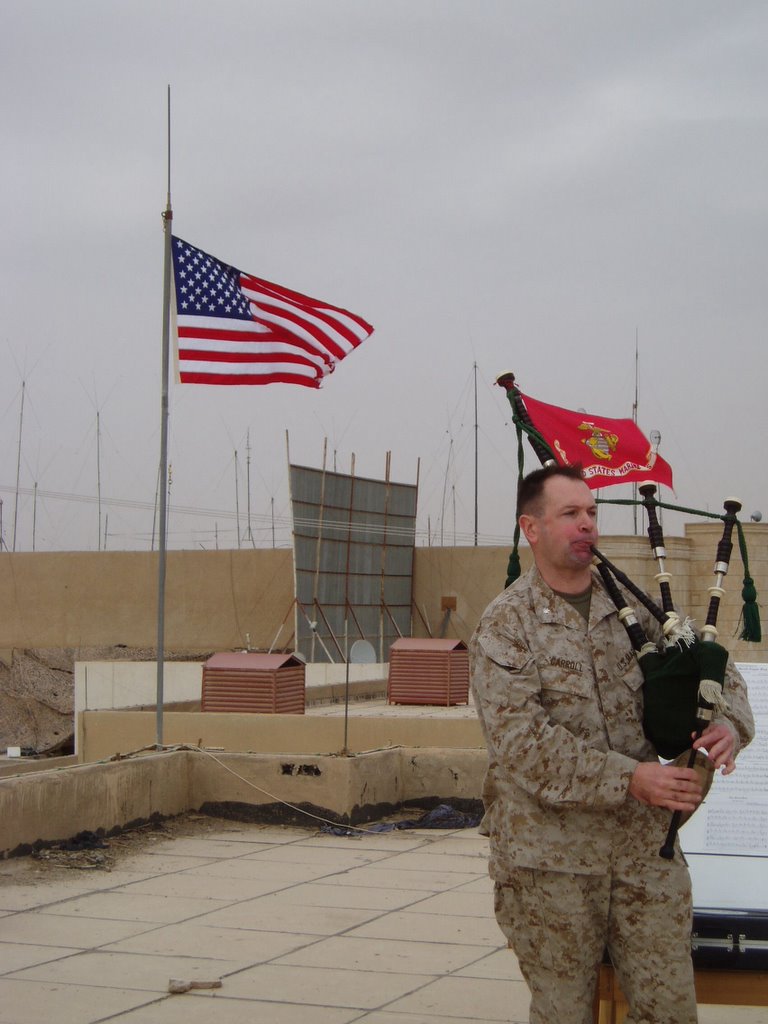
LtCol. Pat Carroll plays "Jingle Bells" atop building 33 on Christmas Day, 2005 at Camp Fallujah


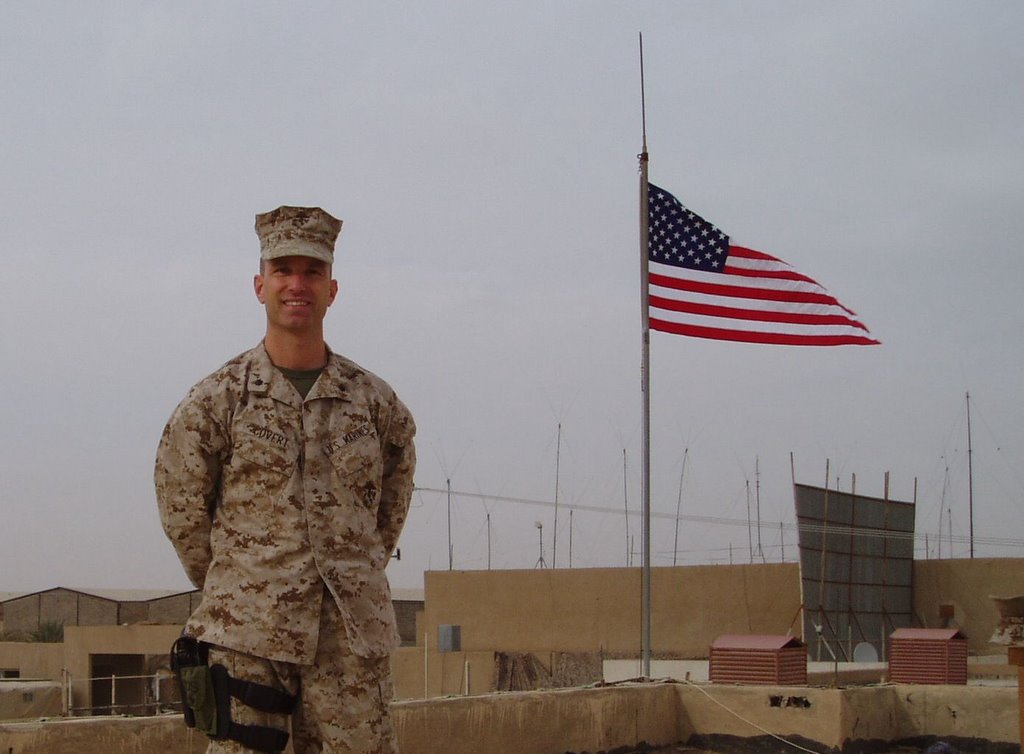
LtCol Craig Covert, Christmas Day, 2005 Camp Fallujah, Iraq

Today is Christmas day. Despite being away from home, most Marines have tried to get into the Christmas spirit. Decorations are everywhere around the camp, hanging in offices, living quarters and work spaces. The dining facility staff set up a Christmas tree next to the serving line and hung decorations from the ceiling. Outside the chowhall, a makeshift Christmas tree stands near the entrance, camouflage netting filling in for pine needles. It was pretty funny watching the TCN’s, or third country nationals, trying to construct the tree. The workers, most of them Iraqi, Indian or Filipino, stood around the tree in a gaggle and argued about what a Christmas tree should actually look like. I imagine they received their marching orders from one of the dining facility managers who’d merely told them to construct a Christmas tree for the troops. A recording of Christmas music plays continuously on a looped soundtrack, sounding like a broken record playing under water. Even funnier are the Marines who jump into the sleigh and start yelling at the reindeer to take them to the North Pole. The tree and music gives everyone a chuckle.

Some Marines express their Christmas spirit in more unique ways. Just an hour ago, I heard the distant sound of Christmas carols outside the building I share with the 6th Provisional CAG. I stepped outside and found the music was coming from the rooftop. Climbing a ladder on the side of our building, I found several Marines from the CAG taking photos and listening to LtCol. Patrick Carroll play Christmas carols on his bagpipes. There’s nothing like the sound of bagpipes playing to send a shiver up and down your spine, even if it is a Christmas carol instead of Taps or a battle hymn.

Thursday, December 22, 2005

A Personal Request

During this deployment, Mr. Peter H. Covert and Mr. George F. Frazier, my father and step-father, both succumbed to cancer. This horrible disease continues to claim the lives of millions of other Americans who will never have the opportunity to live a full and productive life. With luck, successful research will one day stop this disease from bringing sorrow to so many families.

As you prepare for Christmas and head out to purchase those last minute gifts, please consider making a small donation to the American Cancer Society, the National Cancer Institute, or a local or national charity organization of your choice.

The Provisional MP's


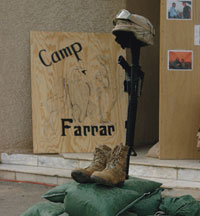
Camp Farrar, named after Sgt. Andrew K. Farrar Jr., who was killed in action in the Al Anbar Province on Jan. 28, 2005


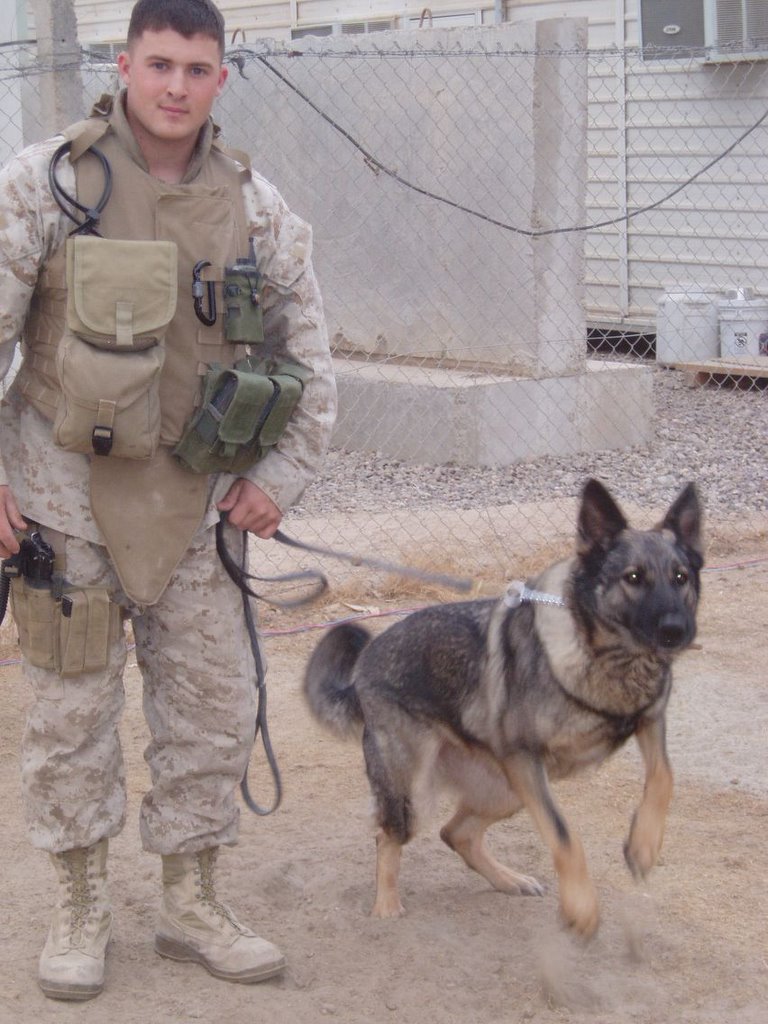
Corporal Aaron A. DeSalvo with his Military Working Dog, Bako at Camp Falluja, Iraq, December 22, 2005


I spent the day with Marines from the 5/14 Provisional Military Police Battalion, located at Camp Farrar, a small enclosed commune located within the perimeter of Camp Fallujah. The camp was named after Sgt. Andrew K. Farrar Jr., who was killed in action in the Al Anbar Province on Jan. 28, 2005. Units often rename their camps throughout the area of operations or as an honor to a hero in their service.

The military police officer's death was a tragedy for his unit, A Company, 2nd Military Police Battalion, and even more so for his family. Farrar was killed on his 31st birthday. The Weymouth, Mass., native left behind a wife and two children. He also left a lasting impression on his fellow Marines. "I think about Andrew everyday," said Sgt. Jonathan Bates, an accident investigator stationed at Marine Corps Air Station Beaufort, S.C. "He taught me that Marines want to be led, and
that it's my job to step up and lead them." Farrar's impact on Bates went
beyond the ranks. "I had the privilege of calling him my friend," he said.

While at Camp Farrar, I interviewed Several Marines, to include the Battalion S-6 Officer (CommO), the Officer in Charge of the Evaluation Assessment training Team (EATT), the unit legal clerk, and a female Regional Detention Facility (RDF) guard team member. It was an eclectic collection of Marines, ranging in rank from Lance Corporal to Captain. Although I was planning to travel to Ar Ramadi and Blue Diamond tomorrow, I have decided at the last minute to cancel my trip to continue my collection efforts with 5/14, thereby permitting myself to enjoy Christmas day in the comfort of my own little home away from home. I'll head north sometime after Christmas.

The last time 5th Battalion, 14th Marines, 4th Marine Division, was deployed to a combat zone, Franklin D. Roosevelt was president and the United States was in a world war against the Japanese in the South Pacific. Although 5th Bn., 14th Marines is an artillery unit by trade, they deployed as a provisional military police battalion with Marines coming from various active duty and reserve units throughout the Marine Corps. It includes 1st Battalion, 14th Marines, an active duty MP Company from Camp Pendleton, a TOW Company from 25th Regiment, MP’s from Louisiana and Minnesota, and Marines from 4th Force Reconnaissance from Hawaii and Reno, Nevada. The battalion is tasked with four main missions while serving in Iraq: area security, convoy security, law enforcement and operating five detention facilities throughout Al Anbar province.

Many of the reservists are civilian law enforcement officers or corrections personnel who are applying their civilian skill sets within their new environment. The very first interview I conducted was with the Battalion Executive Officer, himself a Special Agent with the Drug Enforcement Administration. These Marines have come together from all walks of life, intent on contributing to the continuing fight for democracy in Iraq.

Following today’s interviews, I stopped by the Military Working Dog (MWD) facility to take some photographs of the dog handlers with their canines. Corporal Aaron A. DeSalvo recognized me as I sauntered into the compound and immediately volunteered to bring his dog “Bako” out of his doggy-prison and into the yard, which DeSalvo refers to as the dog’s playground. As I prepared to snap some photos of Bako, the dog snapped back, growling and barking at me from several feet away. Holding Bakos’ leash tightly, Cpl. DeSalvo let me know in no uncertain terms that I should quicken my pace before Bako got the best of his leash. I didn’t argue. Although Bako is trained to sniff out explosives and other incendiary devices, I have no doubt that he might easily double as an attack dog. I didn't stick around to find out.

Saturday, December 17, 2005

A New Start


A photo of Ansam Shahib Ahmed, a translator at the Civil Military Operations Center (CMOC) in Fallujah, Iraq, casting her vote on National Election Day, Dec. 15, 2005

Dec. 16. - An incredible firefight erupted outside the CMOC last night, starting with a few scattered pops from an AK-47. Within seconds, a crescendo of gunfire echoed throughout the city, the night alive with machine gun fire from AK’s and RPK’s. The first firefight was short-lived and trailed off after 45 seconds but was followed by longer, more sustained display of small arms fire about 10 minutes later. At first, the Marines of the CMOC reacted normally, accustomed to the sound of occasional gunfire. However, the sheer volume and intensity of the 2nd firefight gunfire caused more concern than usual and soon the shouts of “gear up, gear up” were being yelled down the hallways.

Through the evening, the sound of Iraqi Police sirens wailed in the distance. The night air was alive, and one could easily close their eyes and imagine they were in New York City. Perhaps the commotion was a reaction to the elections and the closure of the polling sites. Whatever the cause, this was a night of remembrance for Iraqis eager to start a new lease on life.

I finished the day’s interviews with the Director of the CMOC, LtCol. Eloy Campos. Eloy is a Cuban native who emigrated to the US at the age of 15. Commissioned in the US Marine Corps in 1985, he has directed the operations of the CMOC and its Marines since early September. It is my opinion that the elections in Al Anbar Province would not have been successful without the direct intervention of the CMOC Marines. Whether sponsoring meetings for local officials, providing basic necessities for the Iraqi Election Committee members, our hosting international media representatives present to report on the election process, the CMOC directly contributed to the success of yesterdays elections.

From the Los Angeles Times:

Iraq Vote Is Seen As Step Forward

Some hope the relatively calm elections portend a waning of violence. Pragmatists note the tough task of forming a government lies ahead.

By Richard Boudreaux, Times Staff Writer

BAGHDAD — The Sunni imam stood before 400 worshipers during Friday prayers in Abu Hanifa Mosque and weighed the meaning of the previous day's big election turnout by Sunni Arab voters.

It was too soon to tell how many Sunnis would sit in Iraq's new parliament, Sheik Ahmad Taha said in his sermon. But he prayed that the minority's belated entry into electoral politics would, with the help of God, bring an end to bloodshed and "free our land from American occupation."

Expressed in different words, that goal was shared by the Bush administration and leaders across Iraq's sectarian and ethnic divides. It is a vision that could again prove elusive, however, as Iraqis count votes, seat a 275-member Council of Representatives and wrangle over the makeup of a government in the weeks ahead.

Pragmatists caution that Thursday's election, with its greater Sunni participation, would not by itself halt the Sunni-led insurgency or prompt the United States to start withdrawing troops.

Yet Western officials, Iraqi politicians and many voters say enough was different about this election to suggest that it could mark a turning point.

"I do not want to say we have achieved the big breakthrough we were looking for," said a Western diplomat who has tracked Iraq's nascent democracy and relentless insurgency over the last year. "This is going to be a long process. But yesterday was definitely a step forward."

Sunnis dominated Iraq's leadership during the rule of Saddam Hussein but disassociated themselves from politics after his ouster by U.S. forces in 2003. Last January, Sunnis boycotted the election of an interim parliament, enabling the Shiite Muslim majority to control the interim government in alliance with ethnic Kurds.

This time Sunni political parties, including some with ties to the insurgents, were on the ballot. Clerics in Sunni mosques across the country urged their followers to vote, and several insurgent groups agreed to refrain from targeting voters.

In January, insurgents staged more than 250 attacks on election day, killing 44 people. This time, U.S. military officials counted 18 attacks on polling stations. Eight people died.

In Shiite mosques Friday, religious leaders declared the election a success, saying it had undermined the insurgency.

"For those who were saying they have been marginalized and excluded from political life, this pretext for terrorism no longer exists," declared Jalaluddin Saghir in his sermon at the Bratha Mosque in Baghdad.

But few expect the insurgents to hold their fire for long, even as some Sunnis expected to be elected to the new council are likely to press an agenda similar to the insurgents'.

"This is not going to stop violence," President Bush said during an interview Friday on the PBS program "NewsHour." "There are still people out there that are going to try to affect the political outcome, the political debate, with violence."

Sunni politicians and voters insist on a withdrawal of U.S. troops from Sunni cities in central and western Iraq. They seek the release of Sunni prisoners held without charges and an end to killings of Sunni detainees, reportedly at the hands of the Shiite-run Interior Ministry and Shiite militias.

They also want the council to limit decentralization of powers in order to prevent Kurds in the north and Shiites in the south from controlling most of Iraq's oil wealth or breaking away.

Before those explosive issues can be addressed, Iraq faces weeks of vote counting and horse-trading.

The United Iraqi Alliance, the Shiite coalition that has led the interim government, is again expected to fall short of winning a majority of the votes cast. That would require it to bargain with other blocs over the selection of the president, prime minister, and Cabinet ministers.

Such talks can spark violence. Iraqis saw a rise in insurgent bombings during the nearly three months it took to form the interim government early this year.

With official returns from Thursday's vote not expected for a week or more, Sunni parties have already challenged the fairness of elections in parts of Iraq.

They charge that some Sunni districts were deprived of ballots and some Sunni voters were kept from the polls by armed gangs or militias affiliated with Shiite and ethnic Kurdish parties. Irregularities and intimidation could cost Sunnis as many as 10 seats, their leaders say.

But so far, they have been careful to avoid discrediting the entire election.

"Our people's determination is to go forward with the process," said Iyad Samarrai of the Tawafaq front, a leading Sunni coalition. "I don't think there will be a regression."

Sunnis are expected to gain representation in line with their share of Iraq's population. The electoral system divides 230 of the 275 parliamentary seats by province, and Sunni candidates could get as many as one-fifth of those directly elected seats.

Their ability to bargain for Cabinet posts will diminish, however, if returns from those regions scatter votes widely among competing Sunni parties. Among the many contenders are the Iraqi Consensus Front, led by the Iraqi Islamic Party, whose support helped the U.S.-backed constitution survive an Oct. 15 referendum, and a ticket led by Saleh Mutlak, a former member of Hussein's Baath Party, who opposed the charter.

Both Sunni groups say they intend to test their power by trying to amend the constitution, especially to strengthen the central government. It is a battle they say the insurgents, who are fragmented into dozens of groups, will watch closely. The Sunnis are unlikely to succeed in their efforts.

"The process for constitutional revision stacks the deck very much against any attempts at change," said Nathan Brown, a senior associate at the Carnegie Endowment for International Peace in Washington. To avoid a standoff, he added, "we will need to see flexibility not only from the Sunnis but from Shiite and Kurdish leaders."

Sunnis are also expected to press the new government to set a timetable for withdrawal of U.S. troops, first from Sunni cities and then from the rest of the country.

About 30,000 troops, whose return to the United States had been delayed until after the election, are expected to leave soon, putting American troop levels at 137,000. Any further reduction would be subject to agreement between the new Iraqi leadership and the United States, and would depend on Iraq's ability to build up its own armed forces, U.S. officials say.

Whether political compromise and a drawdown of U.S. forces will weaken the insurgency is a different question.

Insurgent sympathizers said in interviews after voting Thursday that the rebels had simply adopted politics as another weapon and would fight both inside and outside the government against American troops and Shiite targets.

As Sunnis take their seats in parliament, the government is expected to hear arguments — once considered taboo — that the only effective way to blunt the insurgency is to negotiate directly with "nationalist" insurgent leaders. By that they mean Sunnis not affiliated with Al Qaeda in Iraq, the terrorist group led by Jordanian-born militant Abu Musab Zarqawi.

"The government needs to differentiate between terrorism and resistance and to negotiate with the resistance, invite it into the government," said Samarrai, the Sunni political leader, who is expected to win a seat in parliament.

"If the government rejects this, the violence will increase."

Times staff writers Edwin Chen in Washington and Ashraf Khalil, Caesar Ahmed and Raheem Salman in Baghdad contributed to this report.

Election Day


Today is Dec. 15, election day. I’ve spent the last 3 days inside the CMOC in the heart of Fallujah. The CMOC, or Civil Military Operations Center was once a children’s center in the city, but was abandoned some time ago. It is now the home of Marines from the 6th Provisional Civil Affairs Group (6th CAG). Located in the center of the city, it has become a safe-haven for Iraqi interim government officials, Sheiks and other religious leaders needing a secure place to meet and conduct business. It is also a gathering place for Fallujans seeking claims against the military. The claims range from damaged vehicle and homes to compensation for family members accidentally injured or killed by American troops. The CMOC itself is surrounded by concertina and Hescoes, with Marines standing watch at a number of observation posts (OP) around the compound. Iraqi Police (IP) stand watch outside the entry control point (ECP), the first layer of defense against threats to the compound. The IP’s also represent US efforts to slowly turn over security of the towns and cities and towns to the Iraqi forces, though Marines hover silently in the background.

Getting to the CMOC is still a dangerous venture for US forces. IP checkpoints are scattered along the route and have dramatically decreased the number of areas where IED’s can be placed. Unfortunately, the threat still remains. On Monday, a Marine Corps 7-ton truck from RCT-8, Camp Fallujah was attacked by a suicide vehicle borne improvised explosive device (SVBIED), or suicide car bomber. The bomber swerved his vehicle into the side of the 7-ton and detonated his explosives, instantly vaporizing himself and most of his car. The 7-ton was damaged, but the new Marine Armor Kit (MAK) affixed to the 7-ton kept the vehicle from being totally destoyed. The two Marines inside the 7-ton cab were injured and one passed away on Wednesday from his wounds. Fortunately, the driver survived and will be able to return to his family. A very sad situation for the families involved.

The Marines of 6th CAG are Marine Corps reservists who have returned to active duty to conduct civil-military operations in country. Civil-Military operations (CMO) can include any sort of community or economic improvement project funded, organized or coordinated by the US Military and other US Government Agencies (OGA), such as the United States Agency for Independent Development (USAID) or the US Department of State. Whether processing a claim, speaking to a Sheik about repairs to a road or Mosque, or organizing national elections, the CAG Marines remain committed to rebuilding vice warfighting. The CAG staff works closely with the community leaders to build cooperation and trust, little of which could be found in Iraq until this year.

The efforts of the CAG have garnered the trust of many Fallujah residents who would not have dared venture near the CMOC a year ago. In 2004, Fallujah was the site of the single largest military operation against the insurgency since President Bush declared an end to hostilities in 2003. In an effort to route Fallujah of the insurgents who had taken control of the city over the preceding months, I MEF plowed through the city in a massive, coordinated military attack. Marines methodically cleared houses and mosques, searching building by building as they pushed through the city blocks. We lost many Marines, but also killed hundreds of insurgents who vowed to fight to the death against the coalition forces. In the process, hundreds of the city structures were destroyed. These buildings still bear the scars of war – bullet holes pockmark the exteriors; roofs and walls lie crumbled in piles where grand structures once stood. The city remains a wasteland bearing a remarkable semblance to Berlin and London following air raids in World War II. Since that time, however, the Marine Corps and OGA have made a herculean effort to reverse the damage inflicted upon the city by helping rebuild the city.

An incredible amount of money has flowed to Iraq for the reconstruction and rebuilding efforts. Until recently, most of the money used for these efforts came from frozen Iraqi assets held since the UN imposition of sanctions in 1991. Billions of dollars were frozen around the globe. From the New York City Federal Reserve alone, several billion dollars in cash were transferred to waiting 747’s and flown directly to the Baghdad International Airport (BIAP), ready to be distributed by the coalition. Further, a separate “oil for food” fund was tapped into and brought thousands of tons of consumer goods into the country. The US and other countries have also invested large amounts of their own monies into the rebuilding effort, though the majority came directly from money that Saddam stole away over the years during his dictatorship.

At this very minute, the CMOC is crawling with reporters covering the national elections. Today is a historic moment…it will be the first time in decades that Iraqis will elect their own government. Many Iraqis have no knowledge of politics or of the political candidates themselves and will vote for the person endorsed by their Sheik or tribal leader. Regardless, this election is the first step toward the formation of democracy in Iraq.