September 23, 2005
Still three days out from catching a helo to Falluja, SSgt Fay and I have been trying to keep busy and not step on Tim Crowley’s toes. Tim, my fellow the Field Historian at Al Asad, has already established a group of contacts within the airfield boundary and has interviewed many of the commands present. Tim has also ventured out and about with several units and has obtained some excellent field interviews of units subsequent to their patrols in hostile territory.
Today, I asked Tim if he’d like some assistance on any of the interviews he had lined up. Having a couple extra bodies to help knock out some interviews is a always a good thing, so we ventured down to Camp Ripper, home of Regimental Combat Team 2 (RCT 2), and met with a subordinate unit made famous by some recent press coverage, Lima Company 3/25.
You may have seen press coverage on Lima Company last month. A Marine Corps Reserve Infantry Company from Ohio, Lima Company was conducting a mission in August near Haditha Dam when one of its Amphibious tractors, known as an AMTRAC, or an AAV, struck a buried IED, or improvised explosive device. The IED was massive, and the fireball that consumed the AMTRAC instantly killed 15 Marines onboard. Only one Marine survived the explosion. The 25-ton vehicle was thrown in the air like a tonka truck, flipped over by the force of the blast and instantly set ablaze, with little chance of survival for its unfortunate occupants. This was not Lima Company’s first combat casualty, either. In May, another AMTRAC transporting Marines from Lima Company struck an IED. Sgt Samuel Balla, 1st Squad Leader, 1st Platoon, recalled the instant the Trac hit the IED. A bright flash of orange, then red light filled the cabin, followed by a blast of incredible heat and eventually, nothing but pitch black darkness. As the Trac filled with smoke, wounded but surviving Marines tumbled out, spilling from the troop hatch, Sgt. Balla included. It wasn’t long before ammunition inside the burning Trac started cooking off, exploding from the intense heat and flame. Four men never made it out of the Trac.
In addition to Sgt. Balla, I also spoke with Major Stephen Lawson, the Commander of Lima Company. Lawson is a consultant in his civilian life, and never dreamed his unit would take more casualties during their deployment than most any other single combat unit in Iraq. Nor would he imagine losing so many Marines to the horrible explosions that are slowly becoming a daily reminder of how cruel war can be.
During our interview, Major Lawson was quick to point out that his Company was one of the only qualified units available to conduct such dangerous missions. Many of his men are being nominated for valor awards, for bravery under fire. I am sure that he, among others, considers every Marine in his unit a hero. They have seen the horror of war first-hand, have lost close friends and coworkers. These Marines have endured hardships most of us will never know. Their pride was evident as I sat among these heroes in their crowded tent. I left the tent that afternoon humbled by the courage of these young Marines.
September 24, 2005
Today I ran into a VMI classmate of mine, Major Ken Devero, who is currently assigned
to II MAW G-3 staff. Ken and I have not seen each other in a decade, and it was great catching
up on the last 10 years. Ken was originally planning to go into the Navy following
graduation from VMI, but his grades kept him from the commission he wanted. After several
years and job ventures, Ken approached a Marine Recruiter and was eventually accepted into the Marine Corps Officers Candidate School in 1991. Now an electronics warfare officer in an EA-6 Prowler squadron, Ken is in the 15th year of his Marine Corps career. As with most VMI classmates who see each other after many years, we had a great time “talking story” and catching up on each others lives. We even stole a few minutes to get a photo for the VMI Alumni Review, which is mailed quarterly to every alumnus. If history holds true, we will see it in print no sooner that the fall 2008 issue.
September 27, 2005
Today we are in Falluja, home of the II Marine Expeditionary Force (II MEF). The MEF is the largest body of Marines assembled within the AOR, and is comprised of subordinate Regimental Combat Teams, Infantry Battalions, Force Service Support Battalions, Companies and Detachments, as well as a host of other cats and dogs like myself. The MEF is basically the Command element for the entire Marine fighting force within Iraq. Major General Johnson is the Commanding General in charge of II MEF and also controls a number of Army units and Iraqi Defense Forces (IDF) throughout the area of operations (AOR).
Our flight to Falluja took place at night under the cover of darkness. Again, most flights and convoys are done at night to decrease the risk to deploying personnel. Pilots and air crew wear special night vision devices to see through the darkness. Their night vision goggles, or NVG’s, pick up the faintest glow from stars, the moon, or flickering city lights below and in essence, magnify it in a way that permits the wearer of the NVG’s to see everything as if it were daytime, though in an eerie, green hue. Every so often, you catch a flicker of the greenish hue surrounding the darkened silhouette of the air crew as they turn their heads away from you, resembling some sort of space alien from Star Wars.
The flight itself was typical as military helicopters go – loud, hot and cramped. The rear hatches remain partly open as you ride through the darkness, and the smell of aviation exhaust permeates the inside of the helicopter. Air crews are fond of saying “don’t worry if it leaks – it’s when it stops leaking that you’ll have to worry,” referring to the dozens of exposed hydraulic lines throughout the interior of the fuselage. It’s a common for grease and oil to spatter your uniform if you’ve spent any amount of time inside a Marine Corps helicopter. Maybe that’s why all the aircrews wear jumpsuits!
We made one stop at a different location, switching helicopters. This required us to lug our gear off the first bird and onto the second. In addition to my ballistic vest with its heavy SAPI plates, I was also carrying a loaded MOLLE pack and two fully loaded seabags containing everything I brought with me to Iraq. As Falluja will be my base of operations for the duration of my deployment, I did not leave anything behind in Al Asad. This made for a quick, unplanned workout as I struggled to walk across the runway to our new point of embarkation with everything in hand. By the time the helo touched off, we were all soaked to the bone with sweat, the heat trapped between our bodies and our body armor.
Transient personnel arriving at Camp Falluja stay overnight in a large tent containing over 100 cots, four rows deep. Two exist aboard the Camp – one for men and one for women. Only in Iraq have I ever seen tents with air conditioning. Similar to the tent I stayed in last year at Saddam’s former Presidential Palace in Baghdad, the tent had air conditioning units installed on each facing wall every 20 feet. Each were set at 16 degrees Celsius – I’m not sure what that translates to in Fahrenheit, but I think a side of beef would have remained indefinitely edible in that tent. It’s a good thing I had my sleeping bag and poncho liner handy or I would have gone outside to share a sweet spot in the sand with the camel spiders.
I spent the day checking into the MEF, trying to explain my purpose to most Marines I met. Unfortunately, the Field History Division is relatively unknown by most Marines, and seldom will you find a Marine who understands our mission until it has been explained in agonizing detail. However, most Marines are fascinated once they realize the scope of the mission and want to get in on the action, particularly when they find out we are basically our own boss in the AOR. I can’t tell how many times I’ve been asked by Marines how they can be part of the unit. Earlier today, the personnel clerk at the admin processing center admitted he had never seen blanket travel orders before being presented with my and SSgt Fay’s orders. We are indeed a rarity within the Marine Corps.
The Camp is no different than any other base in Iraq. It is a hodgepodge of tents, ISO (shipping) containers, prefabricated trailers, existing Iraqi buildings, and plywood construction covering hundreds of acres. Units of all shapes and sizes occupy areas throughout the base, with little apparent organization to the untrained eye. Concrete jersey walls and Hesco barriers are everywhere, as is concertina wire and plywood guard towers, or OP’s (observation posts). The Hesco barriers are so abundant in Iraq that they are beginning to blend in with the landscape. A Hesco is nothing more than a large cardboard box that contains dirt and is wrapped in steel gauge wire – it is a highly effective barrier against small arms fire and shrapnel from indirect fire of mortars and rockets. I wish I had a small portions of the money Mr. Hesco has made from this little war.
A shelter made of Hesco barriers stacked atop each other. This shelter, located at a military camp in As Samawa, Iraq, can hold 50 personnel inside.
I spent dinner with four of my fellow agents from the Naval Criminal Investigative Service (NCIS), each deployed to Camp Falluja in general support of the MEF. I was already acquainted with 2 of them – Scott Milburn and Doug Einsel, and it was Doug who stayed up through the wee hours of the morning to pick up a couple of sweaty, stinky Marines from the helicopter landing pad at the Camp. NCIS currently has agents deployed throughout the theater, conducting criminal investigations, strategic counter intelligence support, and forensic assistance to the many Navy and Marine Corps units deployed. It was nice to see some friendly faces and catch a ride in the NCIS suburban, as I’m sans ride here in Camp like most Marines. The NCIS agents had a long day yesterday when the responded to the suicide death of a young Marine who’d only been in country a couple of days. An unfortunate tragedy, the Marine apparently took his own life with his service weapon. It’s something I’ll never understand.
Thursday, September 29, 2005


Thursday, September 22, 2005
Arrival....Again!
September 22, 2005
We arrived at Al Assad Air Base at 0200 hours, the night bright with stars and lights from inside the belly of the C-5 Galaxy that had ferried us for the last 14 hours. Among the group of Marines accompanying me were 17 K-9 handlers and their dogs. During a 4-hour refueling stop in Rota, Spain, the handlers had the opportunity to walk their dogs and get some fresh air. I had no idea how many dogs were actually in the cargo hold and was amazed as dog after dog came off the C-5, all acting like typical house pets, jumping at their handlers and licking their hands, happy to be out of the roaring plane. However, looks can be deceiving – each dog is specially trained to detect a variety of substances, from narcotics to explosives, as well as acting in the capacity of attack dog on command. These are no simple house pets; I enjoyed watching them but made sure to steer clear of them when their handlers walked by.
We also had several AH-1 Cobra attack helicopters inside the C-5, dwarfed by the size of the huge cargo hold. A passenger compartment lies above the cargo hold and can only be accessed by ladder once inside the aircraft, or by using roll-away stairs similar to those used on some of our older commercial aircraft. Each seat in the upper compartment faces rearward, and there are no windows, much less movies or snacks to make the flight enjoyable. Toward the end of our flight, the crew warned us the flight into Al Assad would be a bit different than what we’d experience at home, as the approach would be fast and the descent steep. The ride in was similar to an roller coaster ride, complete with unexpected dips and turns. Fortunately, roller coasters don’t face the threat of being shot by SA-7 missiles.
We were met by several dust-covered Marines once inside the air terminal and briefly welcomed aboard. Everything occurs in the hours of darkness – it’s safer that way. As our seabags came off the plane, still strapped to their pallets, we split into groups. Many were going on to other bases – Falluja, Baghdad, and smaller forward operating bases (FOB’s), while several were to remain in Al Assad. Al Assad is a joint air base, meaning each service component has personnel assigned within its gates. It is also home to the II Marine Air Wing, or II MAW. Hundreds of Marine aviators, aviation support personnel and other MOS’s are deployed aboard the base. We finally hit the rack at 0400 hours and had a restless night.
This morning, Lieutenant Colonel Tim Crowley, the current Field historian on deck, took us for a brief tour of the base. Tim had borrowed a vehicle from the II MAW S-4, and was more than happy to show us around. Nearly every Marine on base walks or runs everywhere they go, and the use of a vehicle is usually reserved for troops leaving the base, or by those units owning tactical vehicles such as HMMWV’s or 7 tons. During our drive, I was surprised by the sheer number of Russian MIG’s littering the area surrounding the airfield. Saddam’s Air Force had obviously made great efforts to move the aircraft from their hangars before US Forces bombed the airfield. None remain operational, though some still resemble the mighty flying aircraft they once were. Hidden among oasis trees as well as scattered across the open desert, most have been spray painted with graffiti by US troops, their guts strewn out across the ground.
Throughout the day, we were introduced to officers and troops from various subordinate units on Al Assad. Our most interesting stop was the Sgt. Major’s office at Regimental Combat Team 2 (RCT 2), adorned with a dozen weapons seized by RCT 2 from Iraqi insurgents. The weapons, many older than me, ranged from pistols to mortars. Homemade rocket launchers made of PVC pipe displayed the ingenuity of their makers. By dinner, we had visited many units, and finished off our “tour” with a stop at the Morale, Welfare and Recreation (MWR) building recently built on base. The MWR building houses pool tables, fussball tables, a big screen television, and an internet café. A home away from home, it provides the young Marines and soldiers a welcome bit of relief from the hot sun and long hours. Only the impact of indirect fire from insurgents would break many of these Marines away from their games.
We have requested air transport to Falluja, but may have to rely on ground convoy due to other operational commitments. It is there that I will attempt to embed with subordinate units of the 2nd Marine Division, my old Command at Camp Lejeune. Many are headed to the field, and I hope to join them in fight against the insurgency. Until then, I’ll continue to explore Al Assad, and attempt to develop some well-needed contacts within the aviation community. You never know when they’ll come in handy when you are in the field.
We arrived at Al Assad Air Base at 0200 hours, the night bright with stars and lights from inside the belly of the C-5 Galaxy that had ferried us for the last 14 hours. Among the group of Marines accompanying me were 17 K-9 handlers and their dogs. During a 4-hour refueling stop in Rota, Spain, the handlers had the opportunity to walk their dogs and get some fresh air. I had no idea how many dogs were actually in the cargo hold and was amazed as dog after dog came off the C-5, all acting like typical house pets, jumping at their handlers and licking their hands, happy to be out of the roaring plane. However, looks can be deceiving – each dog is specially trained to detect a variety of substances, from narcotics to explosives, as well as acting in the capacity of attack dog on command. These are no simple house pets; I enjoyed watching them but made sure to steer clear of them when their handlers walked by.
We also had several AH-1 Cobra attack helicopters inside the C-5, dwarfed by the size of the huge cargo hold. A passenger compartment lies above the cargo hold and can only be accessed by ladder once inside the aircraft, or by using roll-away stairs similar to those used on some of our older commercial aircraft. Each seat in the upper compartment faces rearward, and there are no windows, much less movies or snacks to make the flight enjoyable. Toward the end of our flight, the crew warned us the flight into Al Assad would be a bit different than what we’d experience at home, as the approach would be fast and the descent steep. The ride in was similar to an roller coaster ride, complete with unexpected dips and turns. Fortunately, roller coasters don’t face the threat of being shot by SA-7 missiles.
We were met by several dust-covered Marines once inside the air terminal and briefly welcomed aboard. Everything occurs in the hours of darkness – it’s safer that way. As our seabags came off the plane, still strapped to their pallets, we split into groups. Many were going on to other bases – Falluja, Baghdad, and smaller forward operating bases (FOB’s), while several were to remain in Al Assad. Al Assad is a joint air base, meaning each service component has personnel assigned within its gates. It is also home to the II Marine Air Wing, or II MAW. Hundreds of Marine aviators, aviation support personnel and other MOS’s are deployed aboard the base. We finally hit the rack at 0400 hours and had a restless night.
This morning, Lieutenant Colonel Tim Crowley, the current Field historian on deck, took us for a brief tour of the base. Tim had borrowed a vehicle from the II MAW S-4, and was more than happy to show us around. Nearly every Marine on base walks or runs everywhere they go, and the use of a vehicle is usually reserved for troops leaving the base, or by those units owning tactical vehicles such as HMMWV’s or 7 tons. During our drive, I was surprised by the sheer number of Russian MIG’s littering the area surrounding the airfield. Saddam’s Air Force had obviously made great efforts to move the aircraft from their hangars before US Forces bombed the airfield. None remain operational, though some still resemble the mighty flying aircraft they once were. Hidden among oasis trees as well as scattered across the open desert, most have been spray painted with graffiti by US troops, their guts strewn out across the ground.
Throughout the day, we were introduced to officers and troops from various subordinate units on Al Assad. Our most interesting stop was the Sgt. Major’s office at Regimental Combat Team 2 (RCT 2), adorned with a dozen weapons seized by RCT 2 from Iraqi insurgents. The weapons, many older than me, ranged from pistols to mortars. Homemade rocket launchers made of PVC pipe displayed the ingenuity of their makers. By dinner, we had visited many units, and finished off our “tour” with a stop at the Morale, Welfare and Recreation (MWR) building recently built on base. The MWR building houses pool tables, fussball tables, a big screen television, and an internet café. A home away from home, it provides the young Marines and soldiers a welcome bit of relief from the hot sun and long hours. Only the impact of indirect fire from insurgents would break many of these Marines away from their games.
We have requested air transport to Falluja, but may have to rely on ground convoy due to other operational commitments. It is there that I will attempt to embed with subordinate units of the 2nd Marine Division, my old Command at Camp Lejeune. Many are headed to the field, and I hope to join them in fight against the insurgency. Until then, I’ll continue to explore Al Assad, and attempt to develop some well-needed contacts within the aviation community. You never know when they’ll come in handy when you are in the field.
Wednesday, September 07, 2005
Hurry up and Wait
There’s an old saying nearly every Marine has said or heard at one time or another in his career…“Hurry up and Wait.” Unfortunately, that’s exactly what I’ve been doing since returning to active duty in early August. A series of events have delayed my intended travel to Iraq, most notably the devastation wrought on the Gulf Coast by Hurricane Katrina. On August 28, 2005, Katrina rolled through Louisiana and Mississippi, flooding the towns of New Orleans, Biloxi, Mobile, and numerous other coastline communities. A co-worker compared the resulting disaster to Mogadishu, Somalia, where bands of looters roamed the city in search of food, or other items. The situation in New Orleans immediately brought to mind the aftermath of September 11, 2001, where the city of New York was left in tatters following the collapse of the World Trade Center. To some, it seemed the odds of rebuilding were insurmountable. For weeks following the attack, everyone wondered how we would recover from such a disaster. However, will and determination are remarkable elements of human nature. We’ve become stronger in our resolve, and the survivors of Hurricane Katrina will also be stronger despite the horrors they’ve seen and endured.
If my current travel schedule holds true, I should depart the US via a C-5 military flight on or about September 16. The largest of all military aircraft in the fleet, the monster C-5 can hold half a dozen Greyhound buses in its cargo hold. A straight, but lengthy flight straight to Iraq if all goes well, though I won’t hold my breath. “Hurry up and wait” has a way of following you regardless of your location and situation.
I will be accompanied by Staff Sergeant Michael Fay, one of only 2 official combat artists in the United States Marine Corps. SSgt Fay returned from Afghanistan in April/May 2005, where he was embedded with 3rd Battalion, 3rd Marine Regiment (3/3), spending his time in Camp Blessing, Wazir Pass, and Jalalabad. SSgt Fay’s drawings are currently archived in the Marine Corps Historical Division and will hopefully appear on the walls of the National Museum of the Marine Corps, currently under construction outside Quantico Marine Corps Bases alongside I-95. The museum is scheduled to open on November 10, 2006, the birthday of the Marine Corps.
I recently received an e-mail that questioned my return to Iraq. The writer indicated I should be going to the Gulf Coast instead, helping our own citizens stranded in New Orleans or Biloxi. While I understand their feelings, it is not my choice whether I serve my country in Iraq or within our own borders. I serve at the pleasure of our Commander in Chief, the President of the United States. The President, backed by Congress, has determined that it is vital to the security of our nation that we remain in Iraq until such time that the Iraq Government can safely and securely protect its citizens. The Iraqis are simply not ready to do so. To leave now would negate any forward progress we’ve made in the shaping and building of the Iraqi security forces. Until such time comes, the insurgency will continue to prosper. We are the “fence line” that separates the borders of security and insurgency. Regardless of ones political persuasion, we are there, and will remain until it is safe to hand over the reigns to the Iraqi government.
If it were not for the requirement to deploy to Iraq, I would certainly endeavor to travel south and assist with the recovery efforts in Mississippi and Louisiana. However, I have been assigned my lot in life, and I must carry on with my assigned task. In response to the aforementioned e-mail, I ask only that each of you reflect on your own situation and consider the extent to which you’ve served your country and your neighbors. Be it community or military service, charity work or donations of your own time and money, I ask you to focus your energy on your own actions (or inaction, if appropriate), not the actions of others. It’s tempting to sit back and play “armchair quarterback,” but actions speak louder than words. If your response to the events in Iraq, Afghanistan, Hurricane Katrina, 9/11, or any other major event was stuck in the “hurry up and wait” mode, now is the time to act vice coaching from the sidelines. Whether you Agree or disagree with the politics in play, now is the time for you to make a difference.
If my current travel schedule holds true, I should depart the US via a C-5 military flight on or about September 16. The largest of all military aircraft in the fleet, the monster C-5 can hold half a dozen Greyhound buses in its cargo hold. A straight, but lengthy flight straight to Iraq if all goes well, though I won’t hold my breath. “Hurry up and wait” has a way of following you regardless of your location and situation.
I will be accompanied by Staff Sergeant Michael Fay, one of only 2 official combat artists in the United States Marine Corps. SSgt Fay returned from Afghanistan in April/May 2005, where he was embedded with 3rd Battalion, 3rd Marine Regiment (3/3), spending his time in Camp Blessing, Wazir Pass, and Jalalabad. SSgt Fay’s drawings are currently archived in the Marine Corps Historical Division and will hopefully appear on the walls of the National Museum of the Marine Corps, currently under construction outside Quantico Marine Corps Bases alongside I-95. The museum is scheduled to open on November 10, 2006, the birthday of the Marine Corps.
I recently received an e-mail that questioned my return to Iraq. The writer indicated I should be going to the Gulf Coast instead, helping our own citizens stranded in New Orleans or Biloxi. While I understand their feelings, it is not my choice whether I serve my country in Iraq or within our own borders. I serve at the pleasure of our Commander in Chief, the President of the United States. The President, backed by Congress, has determined that it is vital to the security of our nation that we remain in Iraq until such time that the Iraq Government can safely and securely protect its citizens. The Iraqis are simply not ready to do so. To leave now would negate any forward progress we’ve made in the shaping and building of the Iraqi security forces. Until such time comes, the insurgency will continue to prosper. We are the “fence line” that separates the borders of security and insurgency. Regardless of ones political persuasion, we are there, and will remain until it is safe to hand over the reigns to the Iraqi government.
If it were not for the requirement to deploy to Iraq, I would certainly endeavor to travel south and assist with the recovery efforts in Mississippi and Louisiana. However, I have been assigned my lot in life, and I must carry on with my assigned task. In response to the aforementioned e-mail, I ask only that each of you reflect on your own situation and consider the extent to which you’ve served your country and your neighbors. Be it community or military service, charity work or donations of your own time and money, I ask you to focus your energy on your own actions (or inaction, if appropriate), not the actions of others. It’s tempting to sit back and play “armchair quarterback,” but actions speak louder than words. If your response to the events in Iraq, Afghanistan, Hurricane Katrina, 9/11, or any other major event was stuck in the “hurry up and wait” mode, now is the time to act vice coaching from the sidelines. Whether you Agree or disagree with the politics in play, now is the time for you to make a difference.
Wednesday, May 05, 2004
The final countdown
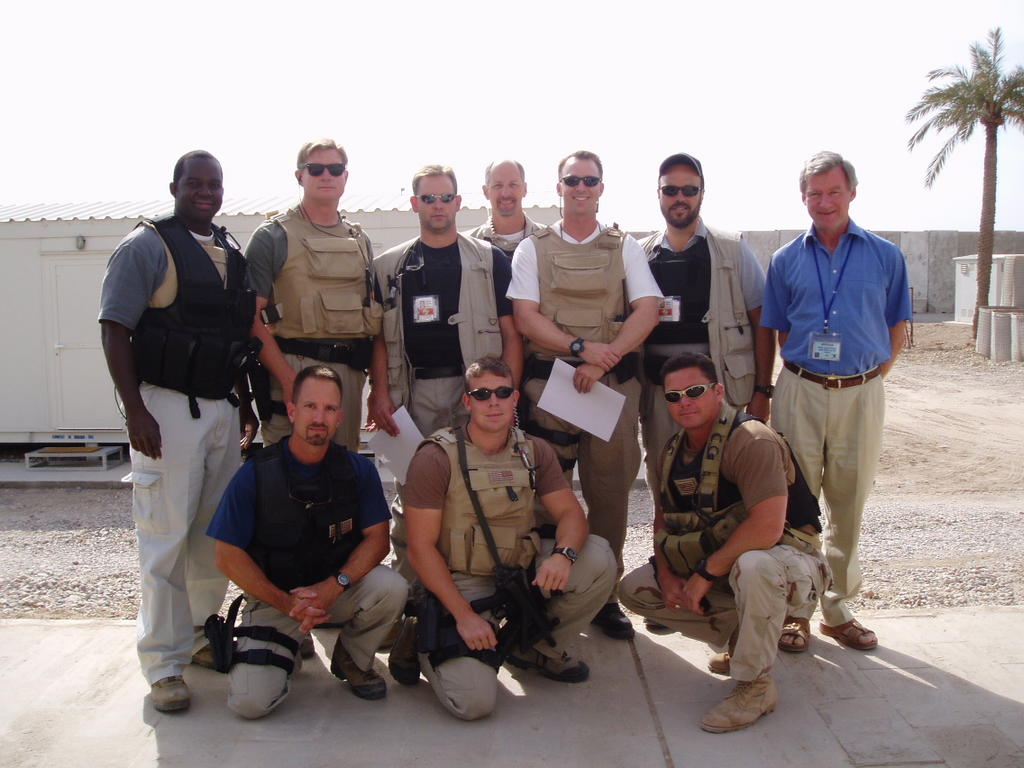
With only two days left in Iraq, my time at the CPA draws to a close. Yet despite my desire to return home to family and friends, I must admit that I feel somewhat melancholy about leaving Iraq and the people I've served with on this detail. During the short time we have spent here, I have experienced things that most people will never have the opportunity to see or do. I've dined on mutton and curry at the village hut of an Iraqi tribal chief, constructed of reeds and thatch. I've wandered the halls of the Presidential Palace in Baghdad and stood in front of the great crossed swords of Saddam's Victory Stadium. I've driven through the cities of Al Kut, As Samawa, An Nasiriyah, Al Amara and Al Basra, and seen the beautiful mosques and souks, or markets, that thrive in these cities. I've met military and civilian coalition members from Denmark, Great Britain, Italy, Holland, Wales, Ireland, and Japan. Each of these events have rewarded me in an intangible way that cannot be explained without experiencing it for yourself.
Certainly, there are many things I am glad to leave behind. Mortar attacks and nighttime explosions top the list, as do roadside IED's, car bombs, and the constant threat of attack against coalition personnel. The need to travel in armored vehicles, wearing 45 lbs of body armor and ammunition gets old very quickly. The inability to stop your car and walk around town without being injured of killed is a very strong factor influencing our desire to go home for awhile.
Yet, I leave Iraq having also seen many positive changes occur since my arrival. New businesses are opening and many Iraqi's are learning the value of capitalism. The infrastructure of the city is improving daily, with new water and sewage plants, electrical stations, and schools. Sanitation workers are slowly removing twelve years worth of garbage from neighborhoods affected by the decade-long embargo against Iraq. Children are returning to school and roadways are being repaired after years of neglect. Despite the negative portrayal of events by our media, a greater percentage of positive things are occurring daily in the cities and countryside than what one is led to believe. The media routinely reports negative events and rarely portrays the accomplishments taking place in Iraq on a daily basis.
Conversely, I have also seen a stalemate in the progress of security for the Iraqi people and the promise of self-government which is truly independent of Western rule. The prospective Iraqi election and dissolution of the coalition appears less likely to happen by July 1st than it did 60, or even 30, days ago. Coalition troops continue to battle extremists in the cities of Fallujah, Najaf, and Amara. Politicians continue to argue the future of Iraq, the makeup of it's government, and the role of religion in the future of this country. In my opinion, coalition leaders do not fully understand the influence of Islam and the stark difference between the western and Arab cultures. The western ways of conducting business and our handling of inter-personal relationships differ from that of the Arabs as much as it did for the early pioneers and Native Americans in the 19th century. Until the Iraqi's can govern themselves and provide security for their own people, U.S. servicemembers and other coalition forces will continue to be looked upon as an occupying force by the Arab world.
My tour in Iraq has spanned the spectrum of human emotions. Whereas I have felt mostly at ease throughout this tour, I have also experienced moments of intense fear and helplessness, greater than I could ever imagine. One quickly come to terms with their own mortality when nearby rocket or mortar explosions jar them awake at night.
Much like the aftermath of the 9/11 tragedy, my time spent in Iraq has left me with an renewed sense of patriotism for my country and my flag. More personally, I come away from this experience with a greater appreciation for my wife, my family, and my friends. We are truly blessed to be Americans and to have family and friends whom we can turn to it time of need. I wish nothing less than success to the members of the coalition as it continues it's progress in Iraq. My time here, however, has ended. It has been a fascinating trip.
Saturday, May 01, 2004
Yankee One!
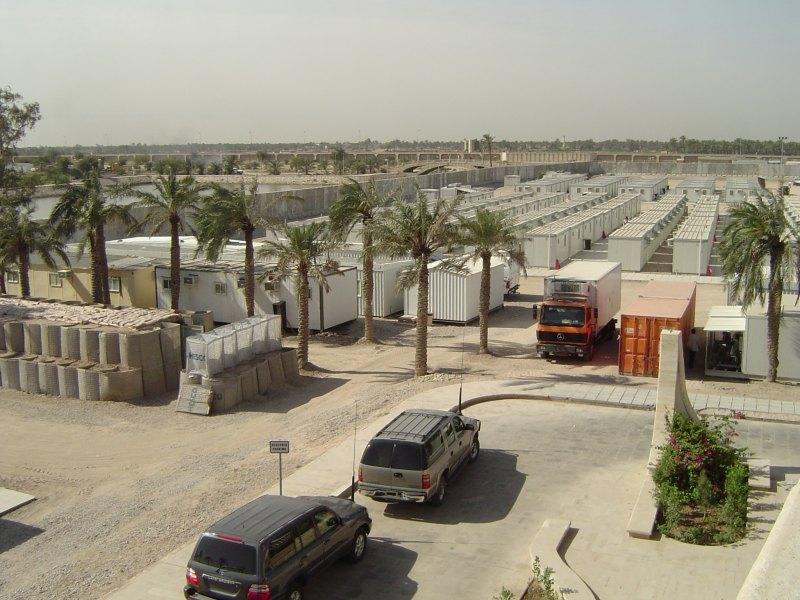
Living and working within a British compound has been a very interesting experience. Although we share a common language and heritage, the British ways of conducting business are far different than that practiced by most of the Americans living within the CPA. It seems the more we try to understand each other, the less we find we have in common.
Take the Ambassador’s security manager, for instance. The security manager is responsible for developing and implementing a security plan for the CPA, which includes the construction of bomb shelters, the placement of barrier walls and sandbags throughout the CPA, and the refinement of perimeter security around the compound. Completely understandable duties considering the environment within which we work. However, in the British mind, those mundane tasks are secondary in nature. Our security manager focuses his efforts on more important, self-appointed duties, and I quote his recent remarks....
1. Chow Hall Monitor – please do not take food nor drink from the dining facility
2. Bathroom Cop - please maintain a tidy appearance in the loo, as women also enjoy the use of these facilities
3. Laundry Police – Your laundry may not be hung from lines beside your lodging, for it may attract flies or other vermin. Please keep all laundry within your quarters.
More frustrating, however, is the overwhelming attitude amongst the British civilian and military staffs that everything should be handled in a politically sensitive nature, as not to offend our Arab hosts (yes, the British do refer to the Iraqi’s as our hosts, although I have yet to be offered a beer or cocktail weenie). For instance, my team had the opportunity to obtain a trained bomb dog for use during the Ambassador’s tenure at the CPA. A bomb dog would have been extremely helpful when checking our vehicles for improvised explosive devices (IED’s) or to ensure explosives aren’t hidden at the various locations to which we escort the Ambassador. However, the British staffers advised us that “Arabs do not like dogs and believe they are filthy creatures. Hence, their presence might risk offending our hosts, and we shall not cause such issue.”
A favorite term of our British counterparts is “celebratory fireworks.” Occasionally, the sound of automatic gunfire will interrupt our sleep. Yet, ask a member of the British staff what occurred the next morning and you will invariably get the response, “probably just celebratory fireworks”. It seems the British have a deep-rooted fear of admitting that bullets are actually being fired at the CPA at 2:00 a.m., or that some of the local populace really doesn’t want us around. Perhaps the 8 mortar rounds launched against our compound over the last 2 evenings were actually kids playing with firecrackers. Extremely large, loud and powerful firecrackers, but firecrackers nonetheless.
The Brits also seem afraid to stand their ground and face adversity, much like British actor Hugh Grant has done in all of the chick-flick movies he has starred. Last week, approximately 1000 followers of the radical Iraqi Shiite leader Muqtada Al-Sadr swarmed the city of Basra and seized the governor’s building in the center of town. This action followed a day of battles between the militia and U.S. led forces elsewhere in Iraq, in which officials said ten U.S. troops and almost 100 Iraqi’s were killed. The Sadr supporters were demanding the release of a Sadr aide arrested by U.S. forces and the lifting of a U.S. ban placed on Sadr’s newspaper. Still, nearly a week after its seizure, the Basra governate remains in the hands of the Sadr militants. The group has sent word that they will leave the governor’s building when the coalition departs Basra. The surprising part is the British are openly permitting the situation to remain this way. Rumor has it that Brit leadership has entered into negotiations with local clerics and allegedly agreed to lobby for the reduction or removal of coalition forces from Basra if order is restored to the governate. The truth and extent of this rumor remain to be seen.
Despite our similar jobs, even the British protection teams enjoy a different outlook from the one I share with my teammates. As a member of the Ambassador’s close protection team, I wear body armor. I also carry a pistol, a carbine, and 300 rounds of ammunition conspicuously exposed when I am in public. In the team’s opinion, deterrence is our best protection! Deterrence works wonders. Yet, we are labeled “cowboys” by the private security contractors (British) who share similar duties at the CPA. Their rules forbid them to expose weapons or carry their rifles outside of their vehicles. In fact, in an attempt to poke fun at our American methods of operation, the British Communications Office changed our radio call-sign. Previously, all security units in Basra were referred to as Golf 1, Golf 2, Golf 3, etc. In a weak attempt at embarrassing us, we were ceremoniously renamed “Yankee 1”. Since no other “Yankees” conduct protective services in southern Iraq, we now own a unique moniker which has gotten more than its share of positive comments during our previous travels to Nasiriyah and Baghdad.
Thursday, April 29, 2004
Where are the reporters?

Over the last couple of weeks, the media has reported a rise in violence occurring in Iraq, mostly within the northern cities of Baghdad and Fallujah. For those of you who follow the headlines from Iraq, you may recall the recent deaths of 5 soldiers killed on March 31 when the armored personnel carrier they were riding in drove over an anti-tank mine. The mine exploded, destroying the APC and killing all of it's occupants. This tragedy was compounded when four civilian contractors from the North Carolina firm Blackwater were attacked and killed, with angry mobs subsequently mutilating their bodies and hanging the corpses from a bridge. Pictures of their charred remains were splashed across the front pages of national and international newspapers, while television stations aired footage taken from personal video cameras. Unfortunately, tragedies like these fuel the media frenzy by providing juicy stories for folks at home who, for the most part, have no connection to Iraq and most likely cannot even locate Iraq on a map. What purpose is served when the average citizen reads only of violence and bloodshed? As pointed out by a friend of mine serving with the Marine Corps Reserve in Baghdad, the media rarely reports anything positive from Iraq. They (the media) seem to revel in stories that portray a "negative, defeatist viewpoint." How many dead this time? How many injured? Are we reverting to the days when a body-count dictates whether we continue to pursue freedom and basic human rights for a country that has suffered under years of tyrannical leadership?
When was the last time you read of something positive being accomplished in Iraq? Hard to recall, isn't it? Where are the stories of the medical facilities being built where no medical facility previously existed? How about the construction of schools for children who have never owned a book? Over the past couple months, I've seen children playing in in the streets of Basra who've never touched a real toy. They play with rusty cans, empty boxes or a car tires they've found in heaping piles of garbage that dot the city. How about a story on the introduction of sanitation services in a city that hasn't seen a single collection of garbage in 12 years? Or a story about the toys donated by American charities to the local "Save the Children" facility in Basra?
Since my arrival, I've seen some remarkable changes occurring throughout the southern region of Iraq. Sure, the country is far from beautiful. However, every time we return to Al Nasiriyah, or Al Samawa or any of the other small towns we've traveled, I see improvements in the infrastructure of this country which never before existed. Under Saddam's rule, the majority of national funds were funneled to party officials in Baghdad and Tikrit, or other Sunni strongholds. Most Shiite dominated areas, such as Basra, suffered as a result and never received funding for basic services that we take for granted, such as water, electricity or medical services. Imagine living your entire life in a squalid adobe home, complete with dirt floors but no roof. Imagine never having plumbing or running water, and gathering all of your drinking water from the nearest rain puddle. These are the conditions that the coalition is attempting to change.
I'd like to see stories that equally portray the coalition's military successes alongside their failures. Yes, 5 soldiers were killed in Fallujah, but so were 18 bad guys who would have done anything to impede our progress. Multiple weapons caches were seized and destroyed, which prevents those weapons from ever being used to hurt another soldier or innocent Iraqi civilian. While millions live in Iraq, only hundreds participate in the violence you see in the media. Most Iraqi's want only two things - security and income. It doesn't matter who delivers it; America, Britain, or any other country. Give the population the security they need to earn the income they desire and success will dominate over failure.
Ensuring the success of this mission isn't easy. We still face incredible challenges, and unfortunately, more injuries and deaths of American citizens will occur. The few who resist the coalition will make it difficult, but not impossible. For the most part, the Iraqi's I've spoken with understand the need for a coalition presence until Iraq is strong enough to take care of itself. They may not like it, but they understand the need for our presence and what we are trying to accomplish.
Everyone who serves in Iraq, be they military or civilian, does so on a voluntary basis. The draft ended long ago, and enlisting servicemembers understand that in today's world, a servicemember's duty is a dangerous job that will take them to dangerous places. Whether we are here out of our sense of duty, the extra money or the pursuit of adventure, all know and accept the risks associated with being in such a place. Families at home hate it. However, for those of us who've seen some of the real progress made, the risk is worth being part of it all. I'd like to think that someday I'll be able to return to Iraq and see a country resembling Kuwait, Bahrain or even Dubai.
Wednesday, April 21, 2004
A Kuwaiti Vacation
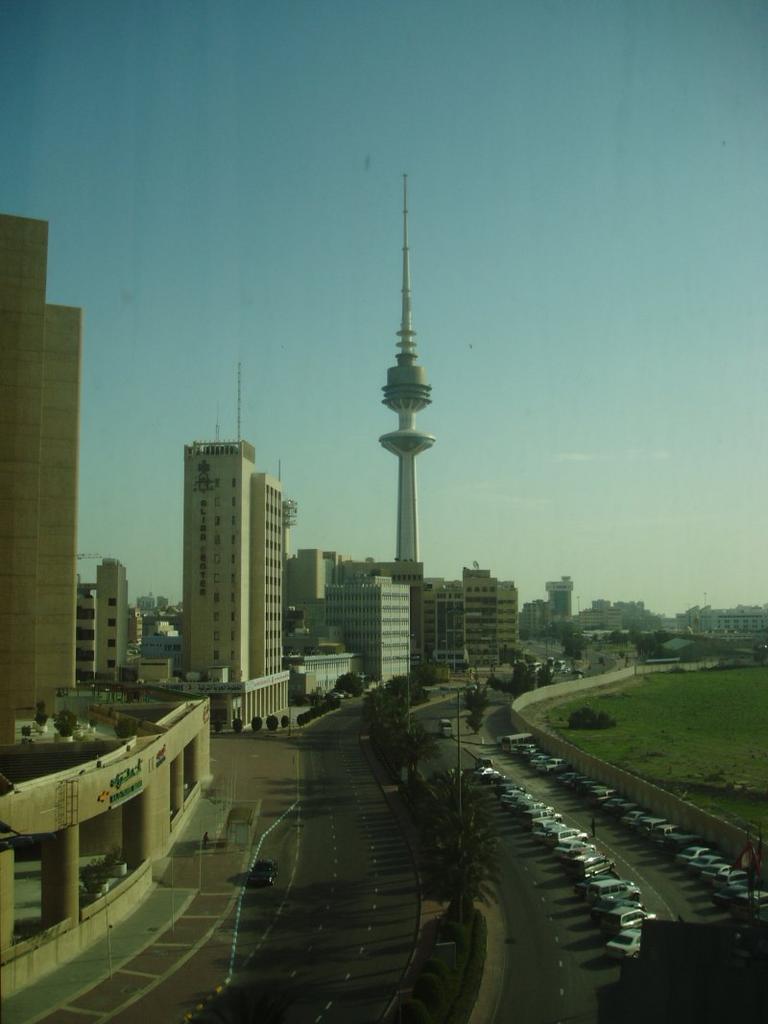
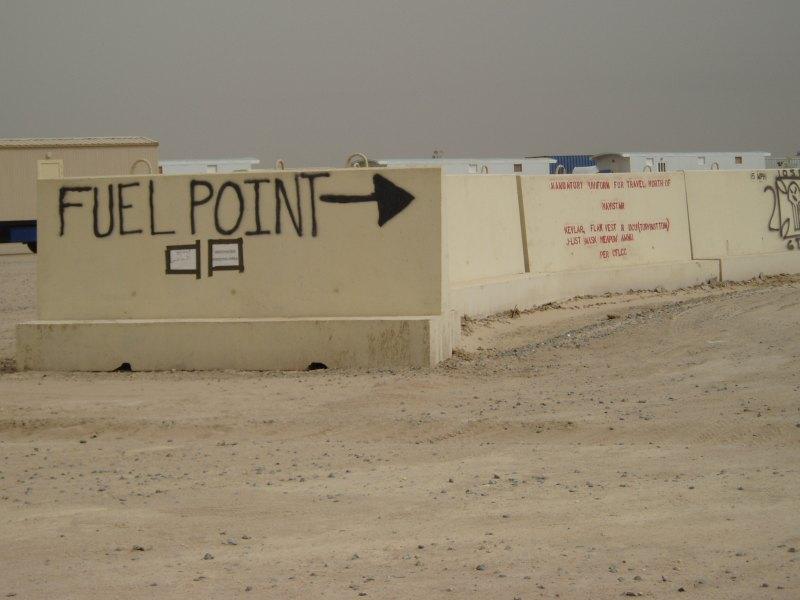
Recently, the Ambassador returned to England on a 10-day business trip, leaving my team "stranded" in Kuwait City during his absence. Although our team could have returned to the CPA, the comfort of a hotel room and the guarantee of gunshot-free nights convinced us to spend our time in Kuwait, vice returning to Iraq. The worst day in Kuwait is better than the best day in Iraq, hands down!
Our time spent in Kuwait was quite interesting and was a distinct contrast to our experiences in Iraq. Although these two bordering countries share a common religion and language, very little else in either country resembles that of the other. The drive from the Iraqi border to Kuwait City takes you over smartly paved city streets and 4 lane highways, complete with American styled traffic signs, mileage posts, and traffic lights. Local Kuwaiti's flaunt their wealth in this oil rich country in many ways. The roads are jammed with all brands of luxury automobiles, to include Jaguar, BMW, and Mercedes, as well as an occasional Ferrari or Lamborghini. The buildings of Kuwait City are mostly modern, beautiful structures with large windows, marble floors, and decorative lighting inside and out. Modern and traditional mosques dot the cityscape, lending a distinctive Middle Eastern flair to the city.
Subsequent to the Iraqi invasion of 1990, Kuwait City was reborn in the image of many other modern, western cities across the globe. The shoreline is dotted with uniquely American restaurants like Fuddruckers, Applebee's, and Chili's. Shopping malls, complete with food courts, record stores, and fashion designer boutiques occupy valued real estate along the coast. Yet, even as the city appears to model itself after modern democratic society, Muslim values still dominate daily Kuwaiti life. A large percentage of Kuwaiti men still prefer wearing the traditional robes and headdresses of the Islamic devout, while many Kuwaiti women remain hidden behind veils and flowing black robes. The contrasting mixture of business suits and robes, western chic clothing and black veils is a constant reminder of the dominating aspect of religion within the Middle East.
One cannot spend any time in Kuwait without also noticing the huge disparity between the minority Kuwaiti population and the majority non-Kuwaiti residents who make up the remainder of the country's inhabitants. Known as third country nationals or TCN's, these individuals provide over 80% of the labor force in Kuwait. Although residents of Kuwait, TCN's are mostly relegated to menial labor and retail jobs and will never hold occupations of value within the Kuwaiti society. Only true Kuwaiti's can be found working among the various ministries of the Kuwaiti government, and are guaranteed a government job or valued occupation based solely on their birthright as a Kuwaiti citizens. Further, the Kuwaiti government provides a stipend to all Kuwaiti citizens for housing and education, while providing no such assistance to TCN's. As such, TCN's are looked upon with disdain by most true Kuwaiti's, who arrogantly believe they are better than the TCN's. It is not uncommon to see a Kuwaiti berate a TCN for the most minor infraction, treating them more like slaves than human beings. Although many TCN's have become successful small business owners, most are hourly wage earners, residing in small, slum-like apartments or group housing similar to the tenement buildings of Washington, D.C. and Chicago.
One major distinction between Kuwait and other western nations is the lack of entertainment establishments and bars that serve alcoholic beverages. Despite the initial appearance of a modern society with American values, the consumption and sale of alcoholic beverages is still punishable by imprisonment in Kuwait. The Kuwaiti newspaper routinely reports the arrest of people who've violated the strict laws banning alcohol and it's consumption. Pornography is also banned in Kuwait. The sale of magazines such as Playboy and Penthouse, as well as a number of non-pornographic magazines, to include Maxim and FHM, is strictly prohibited. Very little tolerance is granted the American appetite for such reading material. A sentence of several years in a Kuwaiti jail awaits anyone caught distributing pornographic magazines or movies.
In less than three hours, our return trip to Iraq will take us from a modern city steeped in traditional Islamic values to a primitive society filled with intolerance and violence. The landscape will change from modern buildings and manicured lawns, to that of dirt roads, mud houses, and war damaged buildings. The roadways of Kuwait, paved and marked with traffic signs, will turn into unmarked roadways, many of which still bear the scars of explosions and tank tracks from coalition vehicles. The threat of IED’s will alter our awareness of our surroundings the second we cross the border. Our trust in the Kuwaiti Police and Ministry of Interior (MOI) officials will be replaced with our mistrust of the Iraqi Police, who have been known to empty their AK-47 magazines at passing coalition vehicles. The coalition has a long struggle ahead of them, despite the religious similarities between Iraq and Kuwait. Beyond religion, the countries are as different as night and day.
The short time I have spent in Kuwait and Iraq serves to remind me that there is truly no society as wonderful to live in as that of the United States of America. At home, women do not worry about having acid being thrown in their faces for failing to wear veils, like the recent attacks against women in Basra and Baghdad. Men are free to worship the religion of their choice. US Citizens and lawful permanent residents share similar occupations in business and industry. Only in America can one rise from pauper to politician; assemble and congregate for any manner or means of religious belief; and speak freely of their opinions and beliefs, be they for or against the standing laws of our government. It should be mandatory for all U.S. citizens, particularly our liberal activists, to spend a month abroad in the Middle East, on the African continent, or in southwest Asia. Perhaps then would they realize the greatness of our society and how fortunate we all are to live and work in a country that allows all of us the freedoms we take for granted on a daily basis.
Monday, April 12, 2004
Faces of the CPA
Within the Basra CPA, there are a variety of people assigned to different jobs and functions. The majority of the CPA personnel are British, to include the Ambassador and his staff. However, a multitude of other nationalities can be found throughout the CPA. There's a contingent of troops from Nepal and contractors from Fiji who provide the majority of our perimeter security. These folks man our gates and watchtowers 24 hrs a day, alongside British soldiers and Iraqi Police (IP) counterparts. There are a dozen or more Dutch and Finnish Police Officers who conduct basic law enforcement and human rights training at the Al Zubayr Police Academy in Basra during the day. They too return to sleep behind the walls of safety at the CPA nightly. Small groups of Italian soldiers and Caribinieri (Italian National Police) make their way through our chow hall on a regular basis while conducting business with the CPA staff. A further look would discover folks from Romania, Scotland, Poland, and Czechoslovakia, all here to support the efforts of the coalition provisional authority.
As you wander the makeshift office spaces among the trailers scattered about the CPA, you will encounter dozens of American contractors from Kellogg, Brown and Root (KBR), who provide the majority of our logistics support, from fuel to construction. The KBR staff has a varied background. Many are retired service members seeking the travel and excitement once offered through their military service. Others are young folks from the Texas who signed on with KBR for the tax-free cash advantages of serving overseas. Many just wanted to do their part for the coalition without having to join the military.
In addition to coalition personnel, a number of local Iraqi's do their part to assist in the daily operations of the CPA. They arrive daily before 7 a.m., and conduct many of the more menial tasks at the CPA, from grounds keeping to laundry service. There is the Iraqi barber who cuts our hair for free. A two or three dollar tip is common practice, though some of our cheaper residents have actually stiffed him without a tip. During my last visit, I asked him how long he had been cutting hair. In broken English, the barber replied he had been cutting his children's hair for years, but that he was actually an engineer by trade. Prior to the Gulf war, he was charged with building highway bridges and roadways in Iraq. However, he had not been able to return to his engineering job following the embargo and now holds three different jobs to support his family.
Two Iraqi sisters used to work in our laundry room, which is nothing more than a CONEX box, or metal shipping container similar to those found perched atop large merchant ships. Their CONEX box had been fitted with an air conditioner recently to keep the box cool during the stifling heat of summer. The sisters, Lika'a and Shaimaa, had worked at the CPA for over a year and were paid approximately $350.00 a month by KBR, a handsome salary for most Iraqi's these days. Every morning, Lika'a and Shaimaa would show up at the CPA by taxi before many of us were awake, on the job no later than 7 a.m. Neither Laika’a nor Shaimaa would leave their post before 7 p.m., at which time the laundry closes for the evening. Unlike most of the Iraqi's who work at the CPA, both Laika'a and Shaimaa spoke fluent, though accented, English. Apparently educated and well spoken, Laika'a and Shaimaa worked 12-hour days in a CONEX box because there are few jobs in Iraq available to educated young women.
On Wednesday evening, Laika'a and Shaimaa were murdered on their way home. According to information we've received, unknown gunmen stopped their taxi and opened fire on them, shooting them each over ten times. These girls were only teenagers, and their only "crime" was befriending American's inside the CPA compound. Everyone here was affected by their deaths in one way or another. Having spoken with Shaimaa just 3 hours earlier, this is the first event that has truly gotten to me since being here. A sense of sadness hangs over the CPA like a fog.
While we expect a soldier to be injured or killed by a roadside bomb or an attack against a coalition convoy, we rarely stop to think of the other lives affected by the violence in this country. For the life of me, I will never understand a people who preach violence against all who don't believe, act, or behave the way these mindless Islamic fanatics do. Murder for associating with westerners, death to the infidels! All in the name of Allah! I just don't get it.
Subscribe to:
Posts (Atom)