I’m on my third day back at Camp Fallujah and have finally reached a point in my deployment where I no longer feel guilty for sleeping past 0700. For the first half of my deployment, I felt incredibly guilty if I wasn’t up by 0630, eating chow and planning my day. Maybe LtCol. Tim Crowley’s philosophy has finally rubbed off on me. While back at Al Asad, Tim regularly slept till 1000 or 1030 every morning. Yet in the field, Tim operated at a marathon pace, expending 100% of his energy throughout his visit. He balanced this expenditure by relaxing in the rear. Warrant Officer Fay and I used to get a good laugh out of Tim knowing he was still in the rack long after we’d eaten breakfast. Now, that attitude of “I’ve gotta get up” has finally left my system. For weeks, I felt I was shirking my Marine Corps responsibilities by sleeping through breakfast. I’ve come to the realization that nobody here gives a damn whether I sleep late or not. In fact, very few people here even know who I am, much less care about my schedule.
We operate in a very different environment from home. For many, there are no set hours, formations to attend, or meetings to make. Every Officer operates in his own little bubble and takes little notice of those around him unless they share the same room or office. It’s sad, really. Despite the hundreds of Marines surrounding me, I don’t know the name of a single resident within my very own berthing area. We share the same bathroom and live only feet apart, yet we’ve never taken the time to introduce ourselves to each other. We isolate ourselves in our own busy worlds. It’s similar to living in New York City where people go out of their way to avoid their neighbors. As long as we accomplish our individual missions – mine collecting oral history interviews – when and how we do it remains inconsequential to everyone else.
That’s what I dislike about this job. I am isolated in a crowd. Though deployed with II MEF (Fwd), I am not “one of them.” I am an individual Marine without a unit. The unit is the heart and soul of the Marine Corps. Marines instinctively depend upon their buddies in their fire team or squad; they rely upon the guidance of their platoon and company leaders; they embrace the cohesion of their Battalion and Regiment. Marines train together, eat together, and deploy together. They value the camaraderie of the unit, of the team. That is the part of this job I regret. I have no team. This position is the antithesis to Marine Corps philosophy. Teamwork is the ethos of a Marine.
Yet, there are benefits to deploying as a Field Historian. I am my own boss. I am not confined to a TOC or COC, working 14 hour shifts, fighting the clock to get my report to the Colonel or General before deadline. I make my own schedule and do my own thing, and THAT is precisely why I’ve felt guilty for the last 3 months. The Marine Corps despises complacency and disorder. It is an organization that relies on uniformity and the willingness to follow direction, to follow orders that may result in injury or death on the battlefield. It is an organization that has successfully won major battles and conflicts because of Marines' unflinching willingness to follow the rules and operate within set guidelines, to operate within a framework built around schedules and timelines. From the day we first set foot into recruit training or OCS, we are told what to do, how to do it, and when to do it. We are supervised as we do it. None of those rules apply here. I am free to travel the AO, to escape the confines of my base and be with the Marines at the tip of the spear. I operate in a manner that is unlike any prior deployment or billet I’ve previously held.
The loneliness of this position is countered by meeting Marines, sailors and soldiers who pour out their hearts to me, sharing memories and experiences that will one day captivate future generations of Marines and patriots. Their stories reflect heroics and bravery, despair and loss. I am honored to spend time with these heroes who give so much in return for so little. They are kids who possess wisdom beyond their years. The honor of collecting these experiences and spending time with these young men and women far outweighs the moments of loneliness I face back at Camp Fallujah.
I will soon depart the confines of the Camp and integrate with the 6th Provisional Civil Affairs Group, or CAG. The CAG is extremely busy right now, preparing for the Iraqi National elections that will occur in 5 days. December 15, 2005 will be a historic event for the citizens of Iraq and I plan to be part of it, if only a spectator.
A Dec. 8, 2005 story from the Washington Post describes local interest in the elections:
In Iraq, Signs Of Political Evolution
Parties That Shunned January Vote Are Now Embracing the Process
By Jonathan Finer, Washington Post Foreign Service
BAGHDAD, Dec. 7 -- Tucked into a bunker-like former headquarters of Saddam Hussein's Baath Party, a type of war room unfamiliar in this country buzzed with life Wednesday. Halfway through a 14-hour shift, campaign workers from the Iraqi Islamic Party, a Sunni Arab group that boycotted the country's previous elections in January, munched rice and kebabs, their faces lit by computer screens.
Across town, hundreds of black-clad followers of the radical Shiite cleric Moqtada Sadr -- who decried balloting 10 months ago as something imposed under American occupation -- beat their backs with chains and stomped across a large poster of former interim prime minister Ayad Allawi. Sadr's political wing has joined forces with the alliance of Shiite religious parties that leads Iraq's current government and opposes Allawi's secular movement.
As Iraqis nationwide prepare to go to the polls for the third time this year on Dec. 15 -- this time for a new parliament -- candidates and political parties of all stripes are embracing politics, Iraqi style, as never before and showing increasing sophistication about the electoral process, according to campaign specialists, party officials and candidates here.
"It is like night and day from 10 months ago in terms of level of participation and political awareness," said a Canadian election specialist with the National Democratic Institute for International Affairs, a group affiliated with the U.S. Democratic Party that is working to ease Iraq's transition to democracy. The institute, which has provided free campaign training to more than 100 Iraqi parties and describes its programs as nonpartisan, granted a reporter access to its employees and training sessions on the condition that no one on its staff be named.
Evidence of political evolution is plastered all over Baghdad's normally drab concrete blast walls and hung on lampposts at nearly every major intersection: large, colorful, graphically appealing posters conveying a wide variety of punchy messages.
Television and radio airwaves are replete with slick advertisements costing anywhere from $1,250 per minute on al-Sumariya, a Lebanon-based satellite station focused on Iraq, to $5,000 per minute on al-Arabiya, a network based in the United Arab Emirates that is popular across the Arab world.
In one 30-second spot, a smartly dressed and smiling Allawi -- normally known for his brusque demeanor -- is shown seated on a stool in a dimly lit studio. "My faith is in Iraq," he tells the camera, to underscore his secularism.
Even the arrival of American-style negative campaigning is evidence of a growing political sophistication, the election trainers said. In recent days posters have started to appear in Sadr City, the vast Shiite slum in north Baghdad, bearing the slogan "vote for the Baathist slate," along with a composite photograph of a face -- half Allawi's and half Hussein's. Allawi was a member of Hussein's Baath Party until the mid-1970s, when he joined Iraq's opposition.
In January, most candidates outside the dominant few parties largely eschewed campaigning, fearing they could be kidnapped or assassinated. Now, even long shots are getting into the act. One day this week, National Democratic Institute instructors explained get-out-the-vote techniques to a dozen members of the Free Iraq Gathering, a new coalition that "probably won't get many more votes than you see in that room," according to an institute employee.
In another room, a Canadian taught workers from the Iraqi National Congress, the party led by Deputy Prime Minister Ahmed Chalabi, how to monitor polling stations on election day to prevent cheating and ensure their supporters are able to vote.
"You are the eyes of the party," he said, warning them to look out for husbands trying to cast ballots for their wives or tribal leaders seeking to vote for their members. "Your party may have the best solutions for Iraq, but it doesn't mean a thing unless people come and put a ballot in the box. You have to think, I have seen Mustafa and Mazen vote, but if someone is missing, maybe you call them up and offer them a ride to the polls."
As in January, the specter of election-related violence still hangs over Iraq. Insurgents have distributed leaflets throughout Anbar province, the center of the Sunni-led insurgency, threatening to kill anyone who attempts to vote. An Iraqi Islamic Party candidate was gunned down with two party workers on a highway west of Baghdad late last month. Allawi escaped unscathed from an attack by armed demonstrators in Najaf during a visit there Sunday, and two days later, a rocket-propelled grenade struck his party's Najaf office.
In several cities in the Kurdish-populated north on Tuesday, demonstrators believed to be loyal to the Kurdistan Democratic Party burned down several local headquarters of a rival party, the Kurdistan Islamic Union, whose members recently withdrew from a KDP-led election coalition. Four party workers were reportedly killed in the incidents.
Because of this, several candidates and party workers said, they cannot apply much of the advice they get from foreign election workers. At one recent session, candidates were encouraged to knock on doors or approach people in restaurants or cafes to talk about issues. They were told to write letters and send them to everyone they know, outlining their platforms.
"You could get killed . . . and we don't have mail there," said Khalid Madhia, a Free Iraqi Gathering candidate from Fallujah. "But it is much easier this time. Before, we were running while we were hiding. We don't have to hide anymore."
Instead of retail politics, candidates rely largely on less direct means of contacting voters: Most major parties now have interactive Internet sites that provide information about platforms. Several parties employ cell phone text-messaging technology that allows them to send messages to hundreds of potential supporters at once. Funding comes from dues and donations paid by members.
Religious leaders are also playing a prominent role in the campaign through networks of affiliated mosques, where imams divide their sermons into a religious discussion and a political discourse that often touches on the coming vote.
At the Iraqi Islamic Party headquarters, hundreds of cardboard boxes full of posters waited to be taken by truck to regional outposts in 14 of Iraq's 18 provinces. In another room, video editors scrutinized the latest version of the party's television ad asking voters to help "end the U.S. occupation." The spot runs continuously on an in-house satellite station.
The party had originally decided to compete in last January's elections despite a broad Sunni Arab boycott, but it eventually withdrew. Sunni Arabs, who account for an estimated 20 percent of Iraq's population, held most top positions in the Hussein government but have seen their influence erode significantly since his ouster.
"Everyone here is excited. The mood and busyness are so much better than before when we just waited to see what would happen," said B.B. Abdul Qadir, an Iraqi Islamic Party official who said his party's goal was to win 60 seats in the 275-seat parliament. "Now we can't wait for the voting to start."
Correspondent Ellen Knickmeyer and special correspondents Naseer Nouri and Dlovan Brwari contributed to this report.
Saturday, December 10, 2005


Thursday, December 08, 2005
A Soldiers Tribute
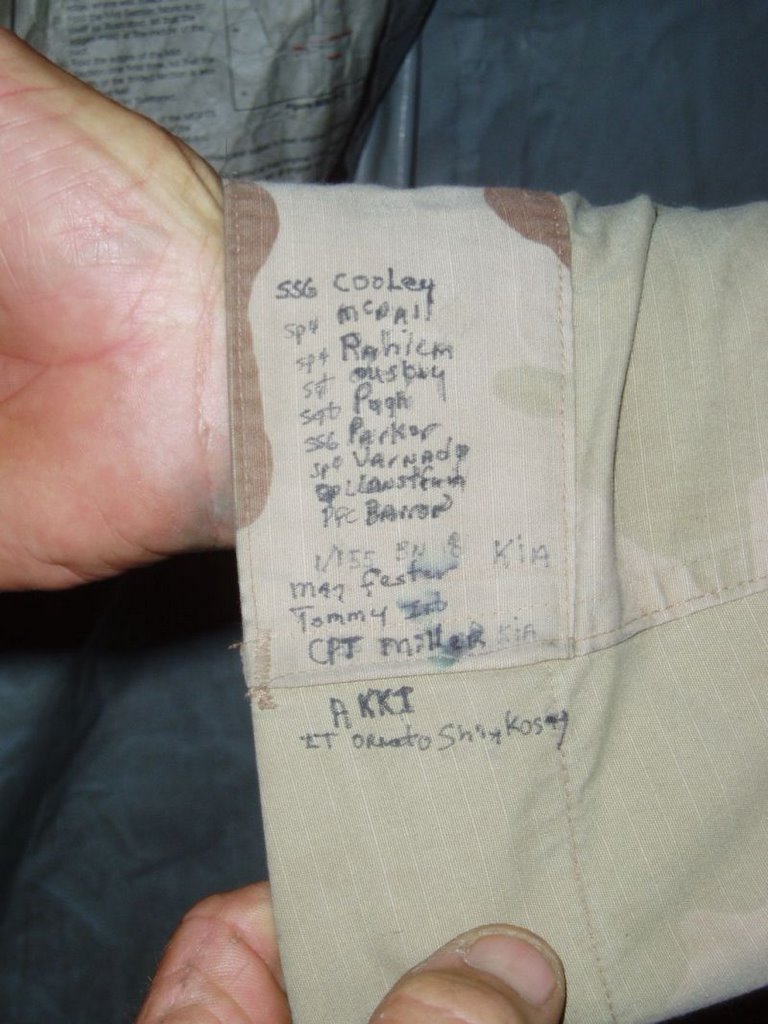
The shirtsleeve of Command Sergeant Major Johnny Marlow, 1/155th Infantry Battalion (the "Missippi Rifles"), part of II MEF (Fwd), listing the fallen soldiers of the Battalion who gave their lives while deployed in the Babil Province. December 6, 2005
Storytellers

During my deployment, I have run across several Marines and soldiers who can weave a story that draws you right in.... I am simply a conduit that will allow the Marine Corps to capture the stories that will benfit our future Marines and soldiers. I sit smugly to the right; the truly gifted storytellers inlcude such folks as:
 LEFT: Staff Sgt. Kevin Manix, Squad Leader, 3rd Plt., Bravo Company, 1/155
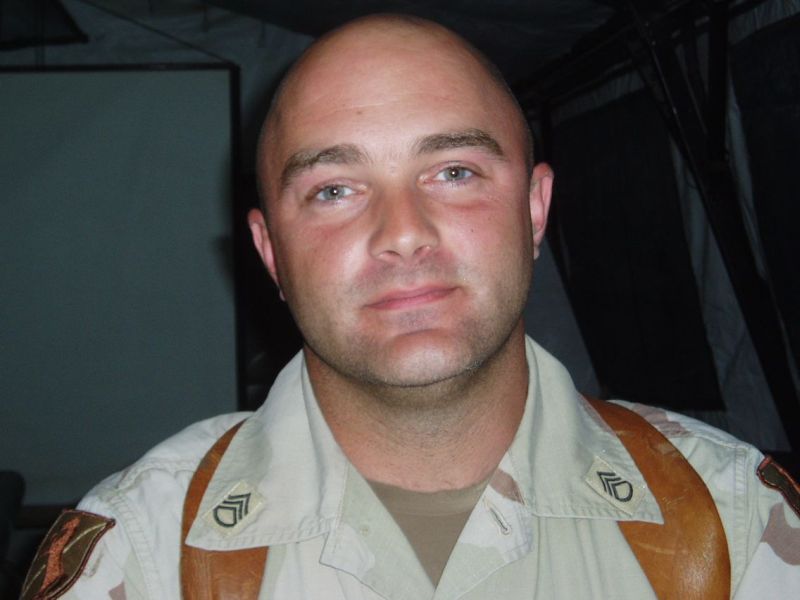 RIGHT: Staff Sgt. Michael R. Cooper, Tank Section Sgt (A section) Delta Company, 1/155
The Babil Province
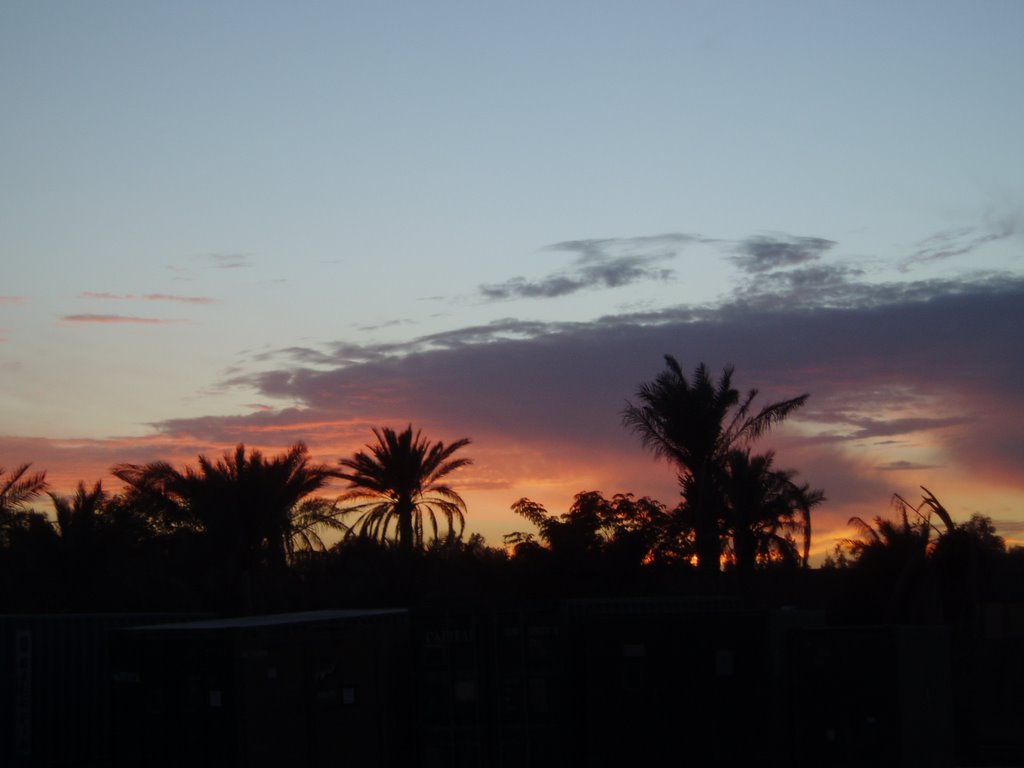
I've just returned to Camp Fallujah after spending the last 8 days in the Babil Province south of Baghdad. My time was split between two FOB's, or forward operating bases located near the cities of Al Iskandariyah and Al Musayyib. The Babil province derives its name from the ancient city of Babylon, which was part of three old civilizations in Iraq: the Sumerian civilization in the south, the Babylonian civilization in the middle, and the Assyrian and Accadian in the north. Al Hillah, the capitol of this province, is an agrarian dream - tall stands of Palm groves cover
the area, criss-crossed with canals and waterways that bring life to the desert. From the air, the palm groves and agricultural farms lie in stark contrast to the desert sands accumulating just beyond their boundries. Locals call the area Al-Fayhaa, which means "a beautiful garden."
The day after I arrived in the province, the 2nd Iraqi Army Brigade successfully completed its certification process which allows the Iraqis to take over counter-insurgency operations from the coalition forces and exercise primary security responsibility over its residents. The exam confirmed that the brigade is ready to plan and conduct military activities dependently, opening the way for coalition forces to hand over security responsibility to Iraqi army units. Military support will be given only in emergencies by a quick-reaction force, medical evacuation or air support. However, Multinational division military advisers and trainers will still monitor 2nd Brigade activities.
The 2nd Iraqi Brigade consists of two battalions situated in different places within the province. It numbers about 1,800 soldiers equipped in light armored vehicles with a variety of weapons. Publicly available reports state the brigade has taken part in five combat operations so far in cooperation with coalition forces. During these operations, 2nd Brigade soldiers searched hundreds of vehicles, persons and buildings, seizing illegal weapons and a large amount of ammunition as well as effecting the detention of many terrorism suspects. During Iraq's Oct. 15 constitutional referendum, the 2nd Brigade established 41 checkpoints and 12 mobile patrols, effectively preventing attacks which had previously injured or killed a number of Marines and soldiers assigned to the Province.
Here are the journal entries I wrote during my latest field evolution. I apologize for the length of the latest entry...
November 30, 2005
Once again, I managed to scam a Blackhawk helicopter ride across the province. It was smoother, quieter, and more comfortable than the standard Marine Corps CH-46 Sea Knight. The "46" was introduced to the military inventory in 1964, and a fair share of the helos still flying have seen service in Vietnam, Panama, and Desert Storm. Despite updated engines and hydraulics, they've outlived their expected shelf life and are soon to be replaced by the new Osprey Aircraft, a tilt-rotor aircraft with a mixture of helicopter and airplance characteristics.
The starkness of the desert is quite distracting. I was completely relaxed and had little concern for my safety as we skimmed across the sands, a naïve mindset to take on in this AO. Occasionally, you'd fly above a shepards house in the middle of nowhere, the structure nothing more than a mud or adobe brick hut. No doors or windows, many without roofs, and certainly no electricity or running water. Occasionally, I caught glimpses of children playing in the sand, or a villager carrying water from large holes dug deep into the desert. I ponder how the people of the desert can live in such conditions and thrive despite the lack of water, resources and infrastructure. Unfortunately, the desert residents share a common denominator with their city counterparts - poor sanitation. The Iraqi solution to ridding oneself of household refuse is to throw it outside the door or on the ground wherever one stands. Trash is everywhere, blowing around in the breeze, littering the landscape as far as the eye can see. Some towns are so covered in garbage that roadway medians have literaly formed walls of trash separating the lanes of travel. Some fault may lie with the lack of money and degraded support to areas outside of Baghdad and Tikrit since 1991. However, the majority of Iraqis show little concern for the environment they live in and seem indifferent to the filth surrounding them. It's certainly a cultural difference that's hard to understand.
Outside the towns, few paved roads carry passenger to their destinations. Dirt roads comprise the majority of travel routes across the country; vehicles create billowing clouds of dust that covers everything and everyone. The simple structures these people use for homes cannot keep out the dirt and dust, much less provide a comfortable, hospitable living environment for its occupants. I question whether the average Iraqi understands that a clean and safe environment would improve their general health and well-being. Children often play barefoot in the contaminated water and are sometimes so completely covered in filth that their hair takes on the reddish-brown hues of the soil, all of them appearing to sport auburn highlights in their jet black hair.
My journey to the Province ended at FOB Kalsu, home to the remaining elements of the 155th Brigade Combat Team, most of whom are headed home by the end of the month. As I gathered my gear and walked toward the transient tent, I sighted Major Erby Montgomery sauntering my way. It was a simple sort of “homecoming,” as I had quickly grown comfortable at FOB Kalsu during my previous visit. The Mississippians quickly put one at ease, southern charm a natural part of their persona. The troops there are counting down the days till their departure - Major Erby Montgomery had only 28 days left when I arrived, but who’s counting? One could feel the intangible excitement in the air and see the preparations that had begun for the BCT’s retrograde home. People are a bit happier, giddy over the prospect of leaving this place after spending the last 11 months in Iraq.
December 3, 2005
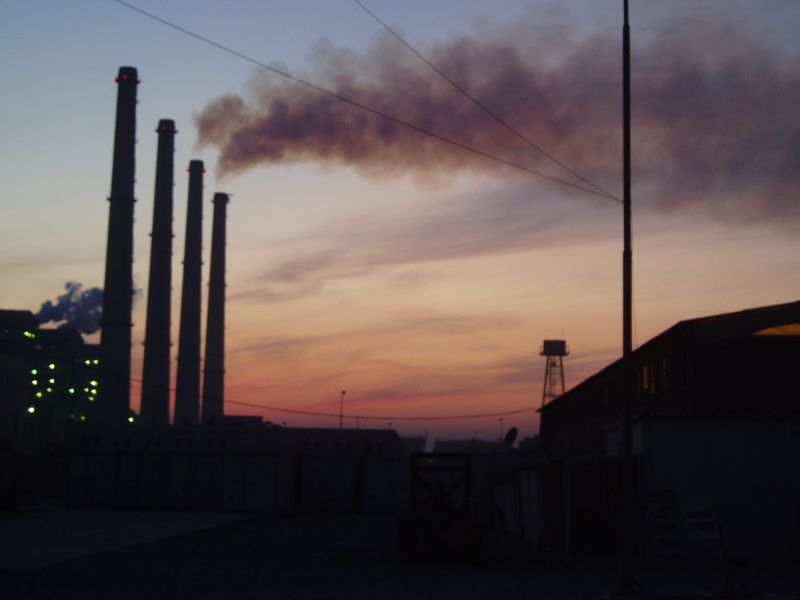
Sgt. First Class Kevin Reeves (155 BCT, PAO) and I traveled via ground convoy to FOB Iskandariyah, a small base located aboard a decrepit but operable Iraqi power plant. FOB Iskandariyah was previously occupied by a Marine Corps Battalion and was known by the name "FOB Chosin" before the Army took over, a reference to the Marine Corps legendary withdrawl from the Chosin Reservoir during the Korean conflict. The successful withdrawl of the 1st Marine Division earned Lt. General Louis B. "Chesty" Puller, himself a former VMI cadet from the class of 1921, a fifth Navy Cross, the second highest award for valor in the Navy and Marine Corps. A fitting name for the FOB, the Chosin Resevoir was also home to a hydroelectric plant during "Chesty's" heroic march. I’d heard the power plant at the FOB delivers as much as 60% of its electrical output to Baghdad, an amazing amount of power considering the distance between Iskandariyah and Baghdad.
The FOB houses several hundred soldiers and is home to a handful of Marines assigned in direct support of the Battalion. The Air Naval Gunfire Liaison Company (ANGLICO) detachment consists of one active duty Marine Major and three highly motivated enlisted Marines, all reservists from 3rd ANGLICO in Califronia. Only one other Marine, a military working dog handler, occupies the post among the hundreds of Army soldiers. As with any Marine mixed in with a band of soldiers, these "Teufelhunden" stand apart from their more casual Army counterparts. Proud of their uniform and service to the Corps, they are a great bunch of guys who handed me the proverbial "keys to their Kingdom" while I visited, their "Kingdom" a simple GP tent which serves as their living, working and entertainment space. The services they provide the 1/155th Infantry Battalion are unique; their presence will be missed in the AO when they displace to more hostile locations.
Aboard FOB Iskandariyah, little attempt has been made to improve the quality of the living conditions for the troops stationed there on a permanent basis. Although the Army took the reigns a year ago, the soldiers still live in GP tents instead of "cans" or hardstand buildings. Sandbags and concrete barriers protect them from IDF. There is no PX, post office, permanent chow hall or MWR facility, making the FOB more closely resemble accommodations found at a temporary battle position or FIRM base. Sgt. Cory Rueb, 1st Platoon Team Leader, Bravo Company, 1/155, provided this paraphrased description of the FOB…
“The amount of pollution and waste around the FOB is horrible. The FOB is a place where nobody wants to be. It is the Iraqi Love Canal. The factory constantly burns waste oil to produce power, and pools of sludge and chemical filth are everywhere. The grounds are littered with caustic bags of chemicals and other materials, and rubbish and debris are piled in shoulder high piles spread across the FOB, the size of several football fields. Smoke is constant – we’ve been warned by medical personnel about it. Noise is also constant – it’s like living next to a freeway, it never goes away. It’s indescribable. We are the only FOB in this AO still using a kitchen mobile trailer instead of KBR – the food is terrible. The food is so bad here, MRE’s are the favored choice.”
Despite the overall condition of the FOB, the staff was extremely accomodating during my stay. A visitors “VIP” tent (CP tent) is permanently set up inside a large building, probably a former power plant warehouse of some sort. The building also houses 2 other tents, one used for meetings, and the other as the personal quarters for the Battalion Commander. It’s not bad. The accommodations are quite satisfactory, it’s just the environment that needs help. If this were a base in the US, environmental health standards would have forced its closure long ago with a subsequent evacuation of all personnel to the nearest preventive medicine unit for immediate screening.
I traveled to FOB Iskandariyah in an armored Chevy Suburban similar to the SUV’s I drove through the country during my previous deployment to Basra. Our vehicle was located toward the rear of a convoy containing perhaps a dozen vehicles. It included armored HMMWV’s, semi-tractor trailer trucks, and 2 armored SUV’s. Although heavy ballistic windows and armor line the compartment, I wished I had been inside a HMMWV. There’s just something about riding in a civilian vehicle inside of a military convoy that makes one feel extremely vulnerable. As the only Officer among 5 enlisted Mississippi National Guardsmen, I was also quite the minority in that Chevy. I’m certain the soldiers weren’t too thrilled to have me in their vehicle either. In lieu of military radio traffic, a rap song was playing on the car stereo. I imagine it’s easy to get complacent after 11 months in theater. I felt neither complacent nor comfortable, however.
The short trip was eerily reminiscent of time I spent in the towns and villages of southern Iraq. Garbage strewn streets remain crowded with old cars traveling to no apparent destination. The roads are dotted with IP checkpoints every few miles. Indigent, lackluster people mill about the sides of the road doing nothing. They stare blankly at the convoy as we pass by, with no way of knowing if any of them spend their evening hours planting IED's along the routes of travel. Poverty is everywhere. I had hoped to see more improvements in the Iraqi society over the last 18 months, though the towns still put forth an image of despair and unemployment. Little seems to have occurred in the villages that would indicate a growing prosperity among the common man.
December 4, 2005
After speaking with a few more soldiers of the 1/155, I have come to the conclusion that yesterdays journal entry may have been a bit harsh. According to everyone I’ve interviewed, the AO has actually seen dramatic improvements. Despite the trash and visual disrepair of the community, it is said that many civil projects are occurring to include the repair and building of schools, IP stations, wells, farms and irrigations systems. Perhaps not all is lost. It’s hard to tell at this stage of the game. Not to mention, I only saw a small portion of the AO on my drive up from Kalsu. Perhaps I'll see other improvements on my next ride out of the FOB.
Compared to FOB Kalsu, I’ve taken some extremely interesting interviews over the last 2 days. The soldiers of the Battalion are some great storytellers. In particular, the “yarn spinning” abilities of SSgt. Randy Louis Manix (3rd Platoon Squad leader, B Company, 1/155) and SSgt. Michael Ray Cooper (Tank Section Sgt. (2-11 ACR), D Company, 1/155) peaked my interest. I listened to these guys’ stories the way I listened to my elementary school teacher reading “The Jack Tales” to my 4th grade class. I simply put down my pen and listened. Their stories were fascinating and captured my attention. Each of them effectively painted a picture of his experiences, captivating me with their country boy tales of warfare in Iraq. It was a good day.
December 6, 2005
I’m stuck at the FOB, my flight cancelled due to the volume of troops flying from FOB Iskandariyah to Kuwait. It could be worse – I have a comfortable “VIP” tent inside the Tactical Operations Center (TOC), one of the only hardstand buildings in use at the FOB. The TOC is located inside a large power plant warehouse. During the first few days the 1/155’s deployment, a number of mortar rounds and rockets landed in the compound, burning up a dozen of tents used for berthing by the soldiers. The TOC was also hit by a rocket which allegedly bounced off the roof, causing no damage. If I have to be stuck here for an extra day or two, at least I’m not in the tents outside.
The ANGLICO team has their own tent (GP large) within the compound, a luxury compared to tents filled with 25 or 30 US Army soldiers. The only Marines on the FOB, the team is manned with one active duty Major and three reserve enlisted Marines. The Marines have wisely befriended a team of IPLO civilians next door and are benefiting form that relationship. The IPLO’s have a commercial internet account strung to their tent and have run an extra connection to the ANGLICO tent for use by the team. Sometimes it pays to be the minority on base. FYI - The IPLO’s, or International Police Liaison Officers, are civilian police officers who have taken a leave of absence to come to Iraq and train the Iraqi Police, or IP.
Since I had no interviews scheduled today, I took a walk around the base, trying to capture some pictures that would show the filth and disrepair of the base. I have come to the realization that I am a horrible photographer. I will stick to my day job. None of my photos truly reflect what poor conditions these guys live in day to day. I decided to interview the Battalion SJA this morning, and am heading out in 10 minutes to catch the Chaplain, both of whom leave for home in the next day or two. I’ll also interview the remaining ANGLICO Lance Corporal from the team, and call it quits. I’ll keep my fingers crossed about getting out of here tomorrow.
December 7, 2005
Pearl Harbor Day. I Just got back in from the field this afternoon. I am pretty beat - I think I either cracked a rib or pulled something while I was out during this trip. I was a sad sight trying to get out of my sleeping bag this morning. I couldnt sit up due to the sharp pain, so I laid there for a few minutes trying to figure just how in the hell I was going to get up. I finally rolled over in the bag and crawled up slowly on my hands and knees til I could stand. Needless to say, I did not have a fun time putting on my gear (about 75 lbs) and catching a convoy this morning for anoither 45 minute ride along Iraq's bumpy roads. Even the helo ride back here was uncomfortable. I'm heading to the hospital on base tomorrow to see if they can Xray and wrap it. Nothing much I can do......
Tuesday, November 29, 2005
Field Marines and Garrison Residents
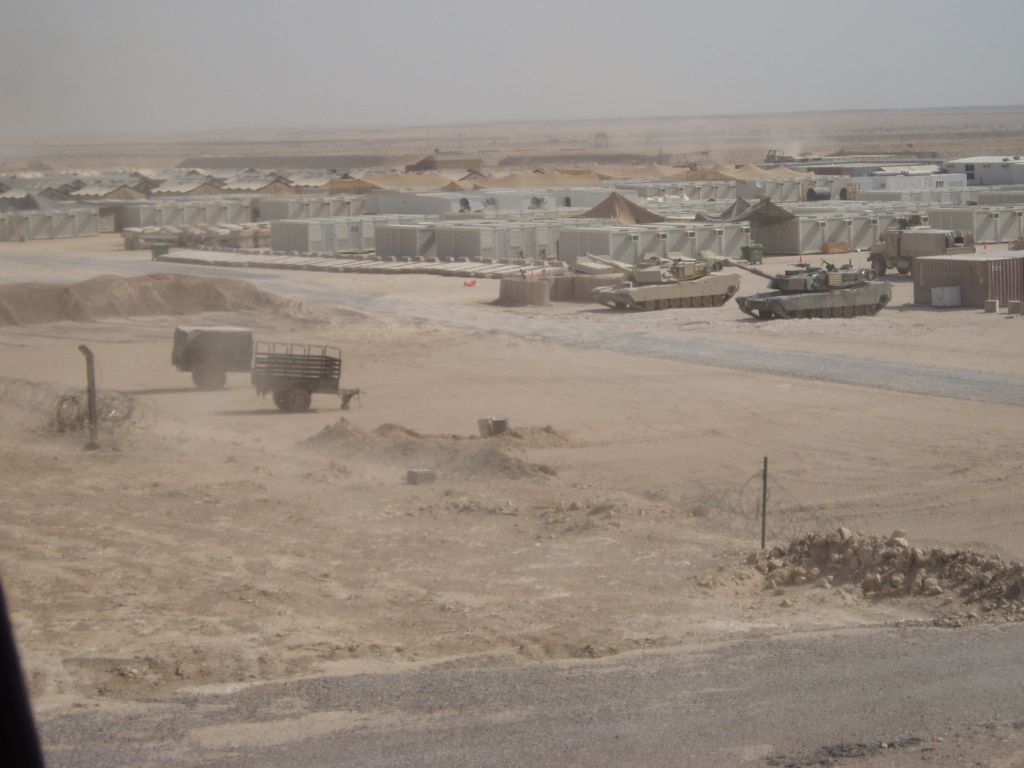
A FOB from the air - November, 2005
I've been asked to provide a description of our living conditions. To give you an idea of the varied living conditions throughout the AO (area of operations), I'll break down the areas into three primary locations - bases, FOB's and battle positions.
Battle positions, or BP’s, are where you'll find grunts from the Infantry Battalions and Combat Service Support units. They are found in locations where the Command needs a combat ready presence - in rural areas or desolate locations; at border checkpoints or within city perimeters. Regardless of their location, a BP is a location where one will find the basic Marine Corps rifleman planning his next patrol, getting some shut-eye, and awaiting his marching orders. BP’s are very basic - dirt berms and hesco barriers surround the location. Entrenched vehicle positions have been dug into the soil to provide protection from small arms fire and indirect fire (IDF). You may find some tents, lots of cammie netting and maybe a plywood building or two reinforced with plenty of sandbags. Observations posts surround the BP's since the insurgency still retains a foothold in the many of the areas we occupy. Marines sleep on the ground in sleeping bags or wherever they can find a comfortable patch of ground. They still eat MRE's and fill their camelbacks from water jugs or plastic water bottles that seemingly appear everywhere. Depending on the length of time spent at the BP, the grunts rarely enjoy a hot (or cold) shower. As they return from the field, their uniforms appear stained with days or weeks worth of perspiration, dirt and oil from vehicles and weapons. Stiff with salt, they can literally stand on their own in a corner. Basic sanitation at a BP includes wet wipes and canteen cups, while the john is initially an MRE box turned on its side and a shovel to cover your mess. Eventually, the unit Corpsman will establish a “cathole” or trenchline near the outskirts of the BP in lieu of the MRE box toilets. Established BP’s eventually receive a much needed visit from a combat engineer unit who will add more permanent Jersey and Texas barriers and build outhouses from plywood and scrap lumber. BP's contain units as small as squads to as large as reinforced Companies. When outside the wire, the troops hunker down for the night in an abandoned home or unoccupied building and "go firm", with active sentries manning rooftops or other areas of vantage.
The next higher standard of living are the FOB's (Forward Operating Bases), usually situated in an area with pre-existing buildings or structures of some sort. An abandoned railroad depot, a deserted community center, or a seized governors complex may often serve as a FOB. The area is fortified with barriers and hescos, surrounded by concertina wire and has some sense of permanence. FOB’s may contain hundreds of Marines and soldiers, and often have hardstand buildings containing offices for staff members conducting tactical planning. The buildings often serve as sleeping quarters for troops. It’s not uncommon to find a room with over 100 Marines sleeping inside, gear and weapons littering the floor. The hardstand buildings provide protection from the weather and elements and are a welcome commodity at the FOB’s. Other empty rooms are divided by crude plywood walls to form multiple work spaces for the Battalion staff, LNO’s (liaison Officers), Company staff, and clerks. FOB’s also house a small cadre of KBR contractors to serve chow and conduct various contracting services for the Marines and other units assigned to the FOB. There is usually a small but permanent chowhall serving hot meals, as well as a basic utility infrastructure which ensures the ability to run the tactical computer systems and lights aboard the FOB. Often there is enough power to light the permanent sleeping areas and outposts. You'll find a mixture of hardstand buildings, wooden SWA huts and GP tents used aboard the FOB’s for every purpose imaginable. Port-o-Johns are scattered around the area and shower trailers are towed into strategic locations, usually with strict hours of usage to conserve water. Some but not all areas have enough generators to power heating and air conditioning units in the workspaces. The troops still use their sleeping bags and field gear though, and rotate in and out of the FOB’s to smaller BP’s about the area, sharing the duties of patrolling the towns and combatting the insurgency. Generally speaking, the FOB's are pretty comfortable, though no vacation. They are the "middle class" of living conditions.
Finally, bases like Camp Fallujah, the BIAP (Baghdad International Airport), and Al Asad are all located on former Iraqi Army or Air Force bases. Camp Fallujah is jokingly referred to as Camp Falluj-eune, a mocking reference to Camp Lejeune, NC. Despite their run-down appearance, the bases are much larger in size and may house thousands of troops and dozens of units. Though all of the bases contain remnants of bombed out buildings and bunkers (many from Desert Storm or OIF 1), the military engineers and sea-bee units (Naval Construction Battalion) have made incredible strides in shoring up these sagging structures. Units have replaced or repaired damaged fencing and plumbing, emplaced barrier systems and watch towers and have repaired damaged roads. Lighting is prevalent throughout the evenings and generators hum softly, providing 24 hours of power to buildings for computers, lights and air conditioning. Port-o-johns are everywhere, as are specially designed trailers containing showers and toilets. Some of the bases have repaired their internal plumbing systems and have the limited use of permanent toilets and sinks. Civilians run amock around the bases – many from Kellogg, Brown and Root (KBR) or a host of other contractors. There are areas for visiting dignitaries and separate buildings set aside to permanently house Marines, sailors and soldiers. Other buildings are utilized as chowhalls, armories, motor transport maintenance bays, medical facilities and laundry stations. MWR (Morale Welfare and Recreation) facilties can be found at these bases, running small gyms and internet cafes and hosting poker nights and weight lifting contests. The largest bases, like Camp Anaconda, Camp Victory, and Al Asad Air Base have set up telephone trailers, Burger King and Subway stands, and Haji marts, or locally run shops. These bases have a crude, yet similar, infrastructure of permanent bases in the United States - you'll find offices in old hangars, sump buildings, literally anywhere that you can shove some people and a desk. Although everything looks dirty and appears to be falling apart, it's regal living compared to the BP’s and FOB's.
The bulk of troops, airmen and soldiers deployed to OIF live aboard these large bases and and rarely experience the harsh realities of living in a BP or FOB. Some units regularly convoy to the field or conduct security duties outside the bases, yet few actually engage in direct offensive action with the insurgency. The bases have become a garrison environment, awash with many comforts of home and overflowing with care packages labeled "any Soldier, any Marine." Most garrison residents are well-fed and rested, relatively safe within the perimeter of these large camps. Their lives become regulated more by the hours of the chowhall than the sounds of gunfire. Certainly, the ever-present possibility of indirect fire remains omnipresent, but becomes increasingly less common as the insurgency is destroyed or pushed out of Iraq. One easily discerns garrison troops from their field counterparts by the look of their uniforms - crisp and clean compared to salty and faded. The field troops look permanently weary; sleepless nights and endless days. Although all deployed servicemembers suffer the pain and anxiety of separation from loved ones, the garrison residents return home with an entirely different experience than their brothers in the field.
Nobody wants to be a garrison Marine, soldier or sailor. Everyone deployed wants to make a difference in this conflict - they want to be viewed as equals among their peers. Without question, Marines deployed in a garrison environment feel trapped within the confines of the base. Nearly every Marine, from Supply clerk to Staff Officer, yearns to travel outside the wire. Rare is the Lance Corporal who hasn't begged his Gunny to join the next convoy off of the base. They want to be out there among the grunts, lugging the ammo and squeezing the trigger. They ponder the possibility of baptism under fire; the fright of combat and the realities of conflict. They want to be in the fight yet resign themselves to their lot in life, stuck aboard the base for various reasons. It's a fate they cannot change. The phrase "Every Marine a Rifleman" rings hollow in their hearts.
Thursday, November 24, 2005
Feeling my age
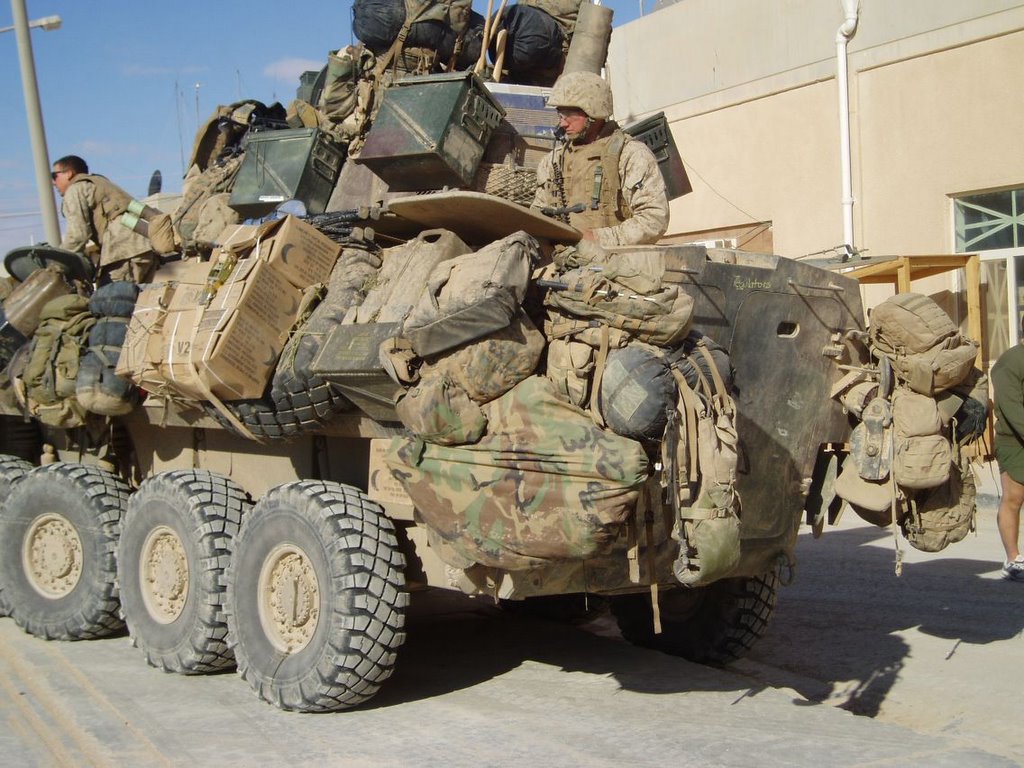
A light armored vehicle (LAV) heading out on patrol from 1st LAR.
Much like a gypsy wagon of yesteryear, everything they own is
strapped to the sides of the vehicle. One crewman jokingly told me it
was extra protection against shrapnel, that "any bit helps." 11/22/05
I left Al Qa'im yesterday flying "space available" status. About 75 Marines and soldiers were retrograding out of Al Qa'im at the same time, while the CH-46's and 53's kept rolling in to take them away. Loading up and taking off in clouds of dust, everything and everyone quickly resembled sugar cookies, only covered in sand instead of sugar. Fresh off the lines from Operation STEEL CURTAIN, these guys are headed back to various bases and camps spread throughout Iraq. Many are going home minus close friends and fireteam members.
Wearing full battle gear – helmet, flak and SAPI plates, sidearm, M-16A2, full pack, loaded pistol and rifle mags – man, it’s something I’ve not done for years at any length and had forgotten just how difficult it can be on the body. Hell, as a boot 2nd Lt., it was difficult. Yet as a wiser, but much older LtCol, it seems worse than I remember. I don't recall the gear being that unwieldy when I was younger. I envy the youth and energy of the young Marines around me. Mentally, I feel I’m still at my peak, but the discomfort of regularly wearing it makes me feel old and out of shape.
I awoke this morning completely unaware that today is Thanksgiving. Heading into the Camp Fallujah DFAC (dining facility), I was oblivious to the decorations posted in the chowhall. It wasn’t until I saw the serving line manned by various unit Chaplains serving turkey and stuffing that I realized today was a holiday at home. Even in Iraq, the folks are feeling the holiday spirit.
Leaving chow, I overheard some young Lance Corporals talking about their meal. I love Marines – they are the funniest people on earth. And the most vulgar. One looks over to the other and says of his meal…”man, that sh__ was fu____n’ good as f___.” Whether a noun, adjective or adverb, Marines turn cusswords into an art form. I’ve said some things close to that and only have my VMI and Marine Corps background to blame for my crude lingual habits.
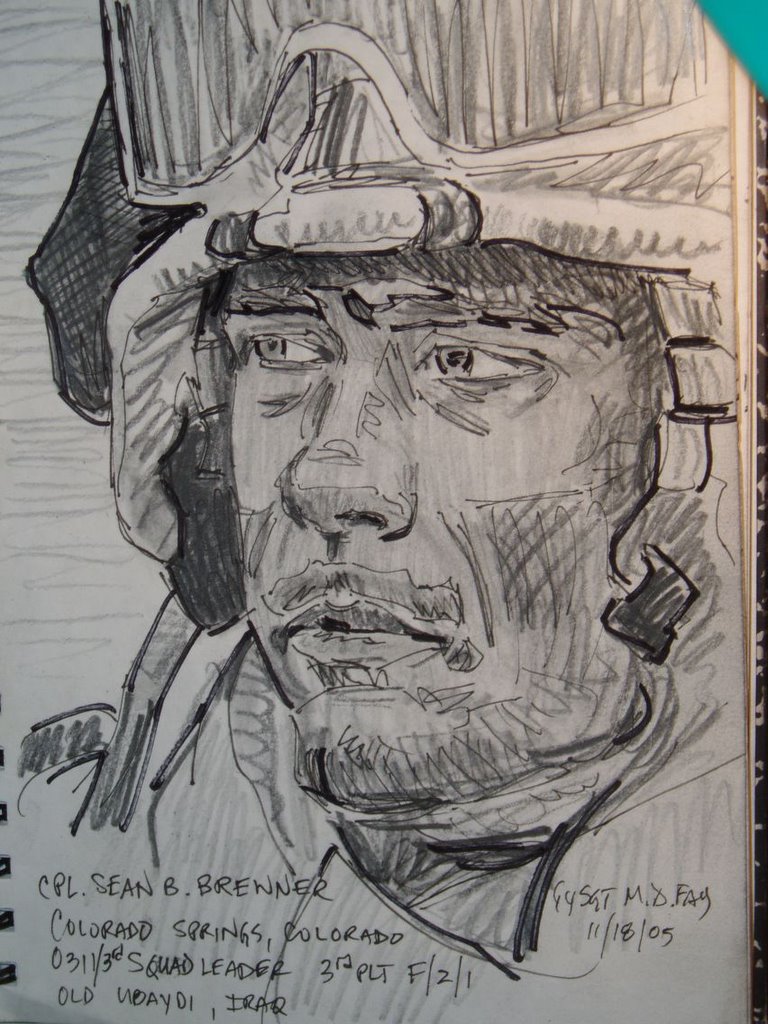
Gunny Fay, the combat artist who deployed with me, also returned from Al Qaim this morning. He was out with Fox Company, 2/1 during the same time I was with the Regiment, and was proud to show me his shrapnel wound received on the 15th during the fight in Ubaydi. For those of you who haven't read my entire blog, Gunny Mike Fay is the Marine Corp's only resident combat artist, and regularly embeds with units on the front line, taking up a rifle during the fight, and occasionally snapping some photos or sketching some artwork during lulls in the action. He brought home some outstanding sketches from his travels, posted below. He's a heck of an artist, and I'm proud to announce he'll be promoted to Warrant Officer on December 1st.

Subscribe to:
Posts (Atom)